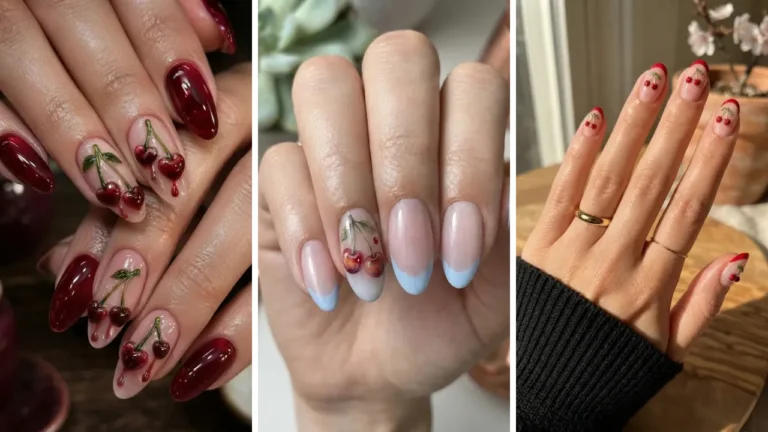
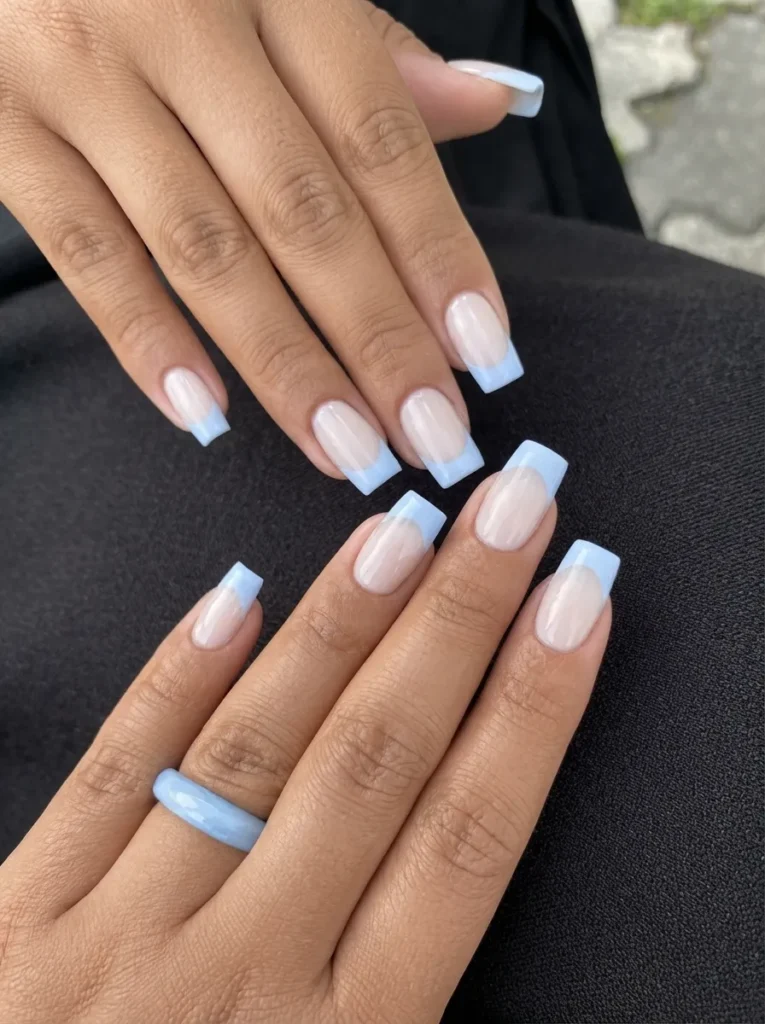
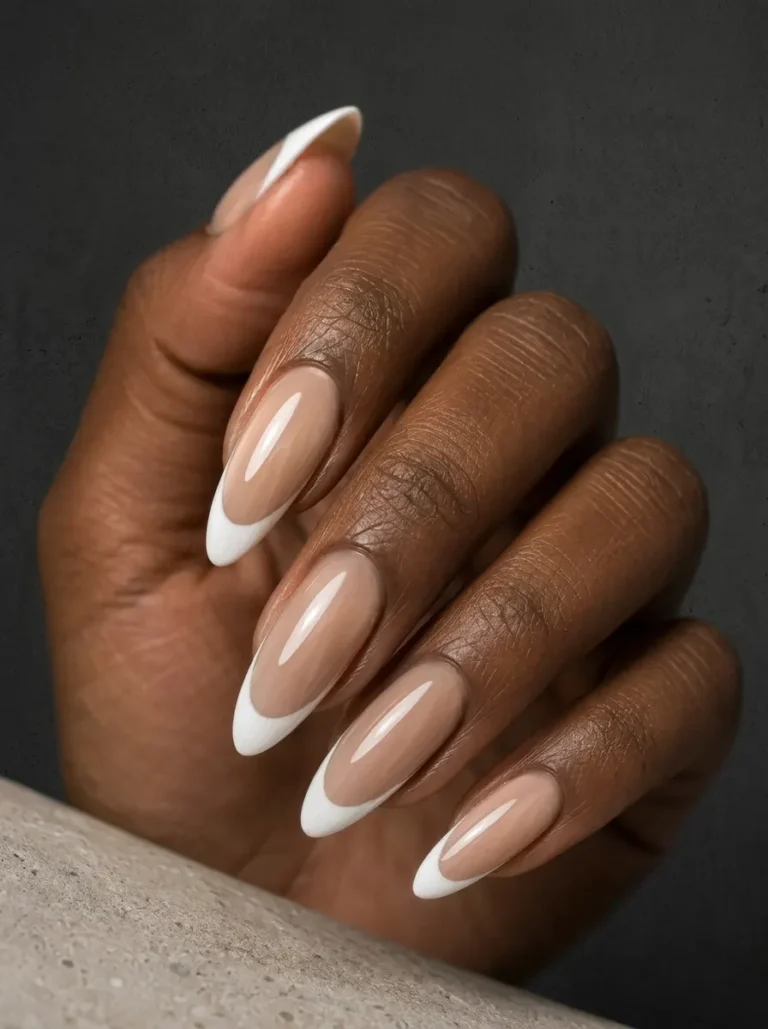
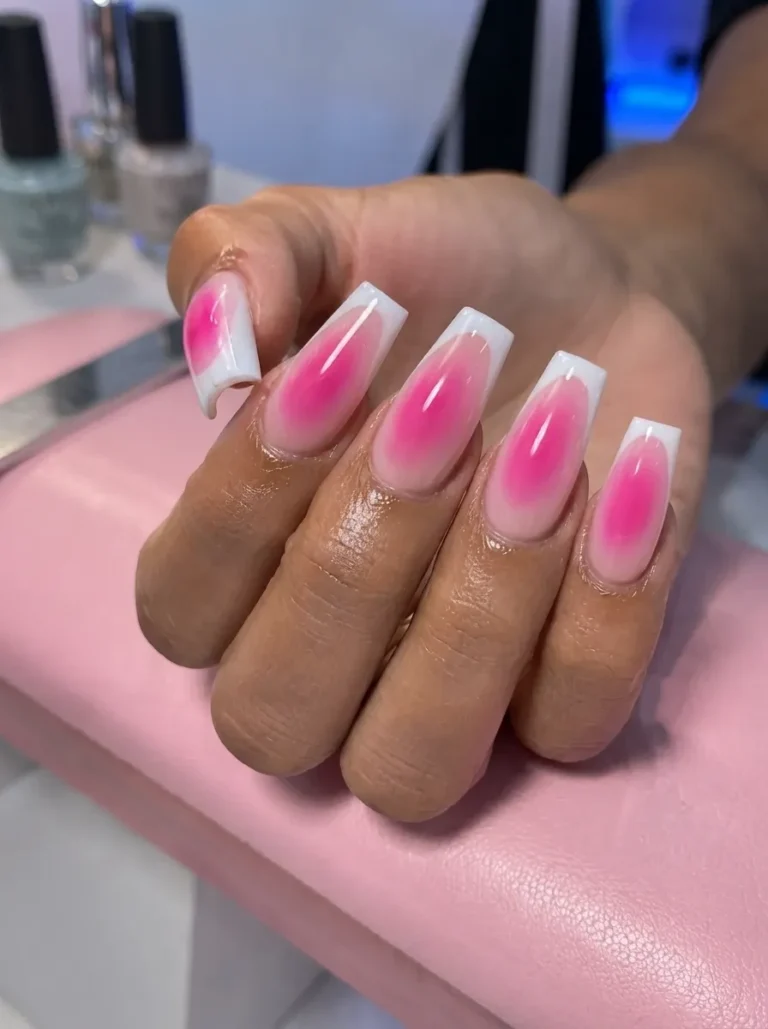
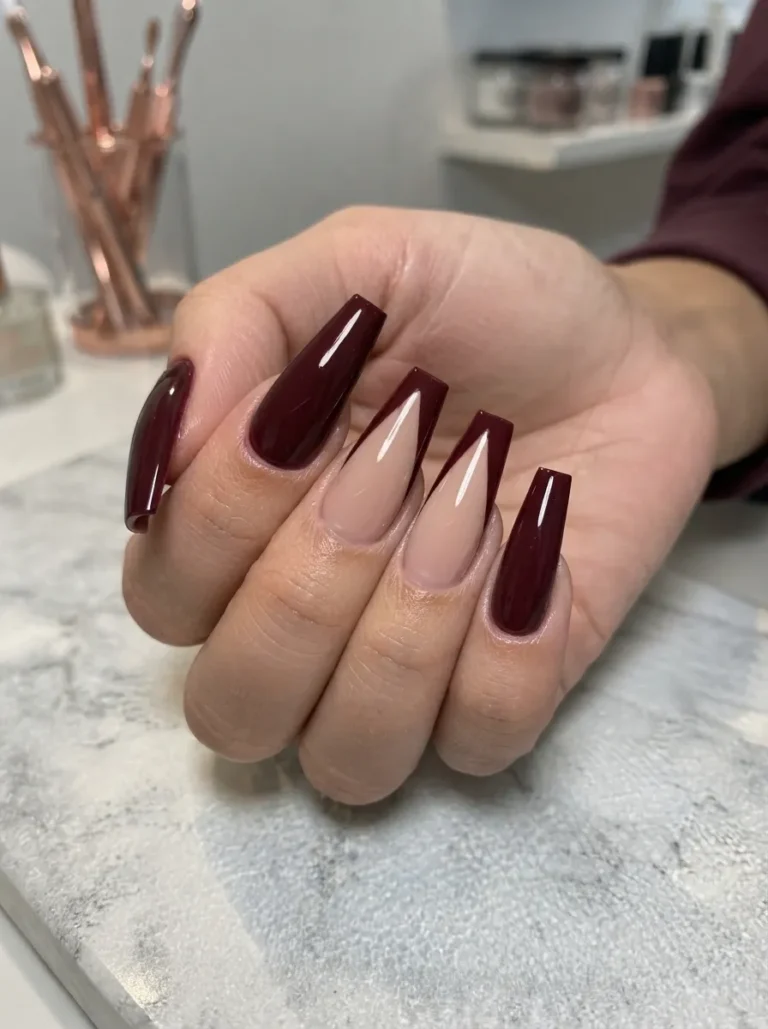
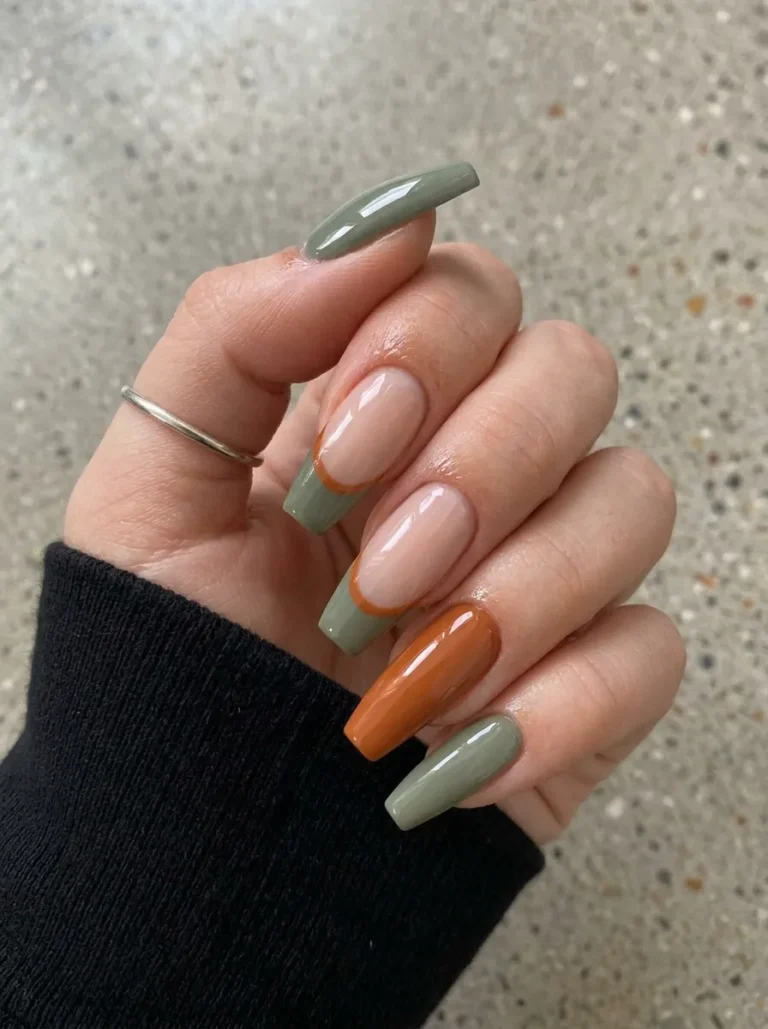
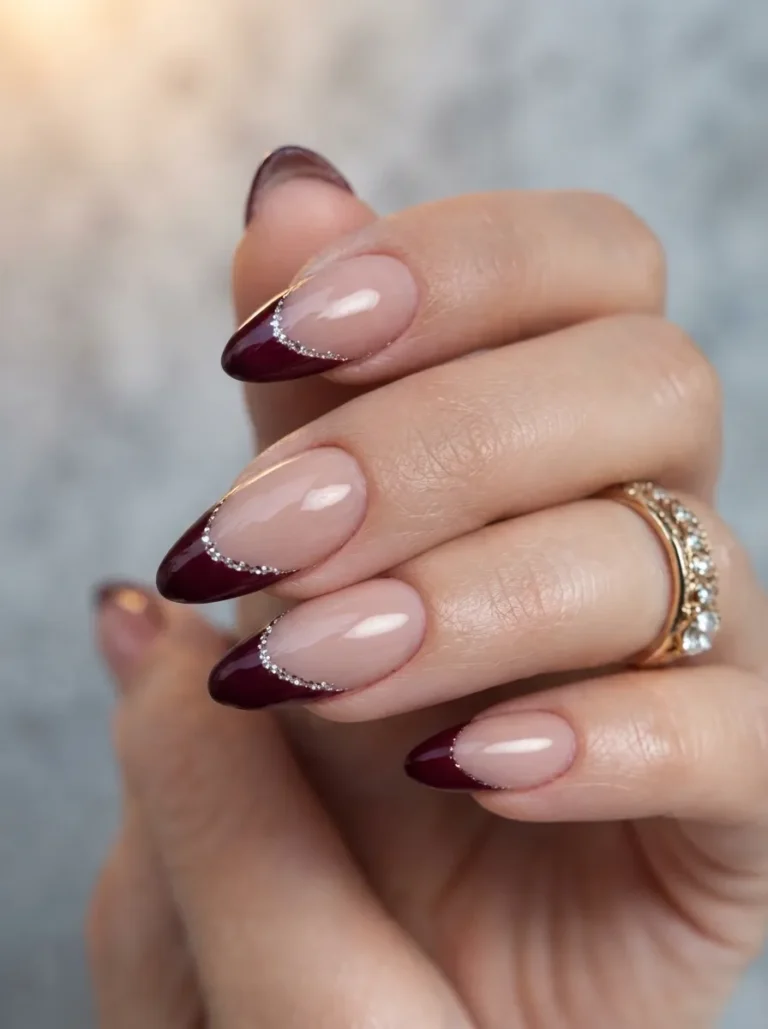
A French tip comes down to two decisions: where the line sits and what color fills it. Change either one and French tip nails can look bridal, sporty or downright edgy. Below you will find classic versions first, then color, shape and finish twists, then a step-by-step for painting your own.
A French tip manicure pairs a sheer or natural-looking base with a contrasting color painted along the free edge of the nail. The classic version uses a pale pink base and a white tip. Modern versions swap in any color, finish or line shape.
Classic French tip nail designs
These French tip nail designs stay close to the original, so they suit offices, weddings and anyone who wants a quiet manicure.
1. The traditional white tip
A soft pink base and a clean white tip is still the reference point for every other look here. Ask for a slightly sheer base so the nail looks natural. It works on nearly every nail length.
2. Milky base with soft white tip
Swap the sheer pink base for a milky one. The contrast drops, so the tip blends gently instead of sitting as a hard band. This option also hides regrowth a little better.
3. Deep smile line
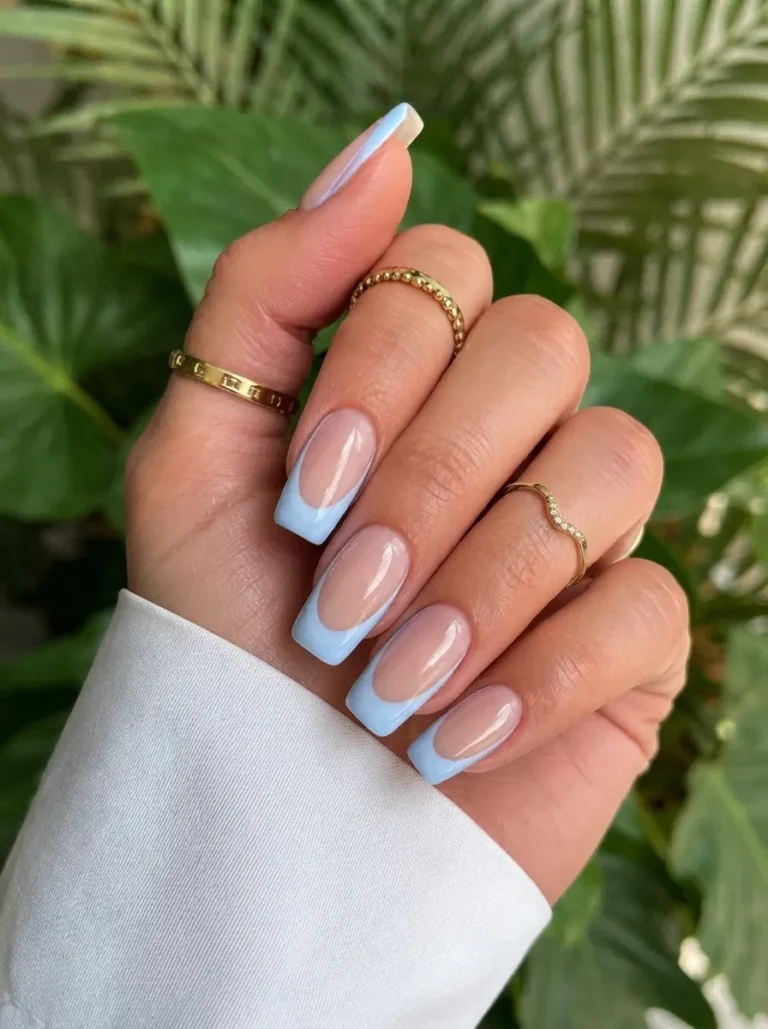
Curve the line deeper at the sides, so it dips like a wide smile. The shape makes nails look longer and slimmer. Square and almond shapes show it best.
4. Micro French
A hair-thin line keeps the look modern and low-key. Because so little polish sits at the edge, small chips are less obvious. Use a fine liner brush or a steady salon hand.
Colored French tips with more attitude
Color changes the whole mood while the structure stays familiar.
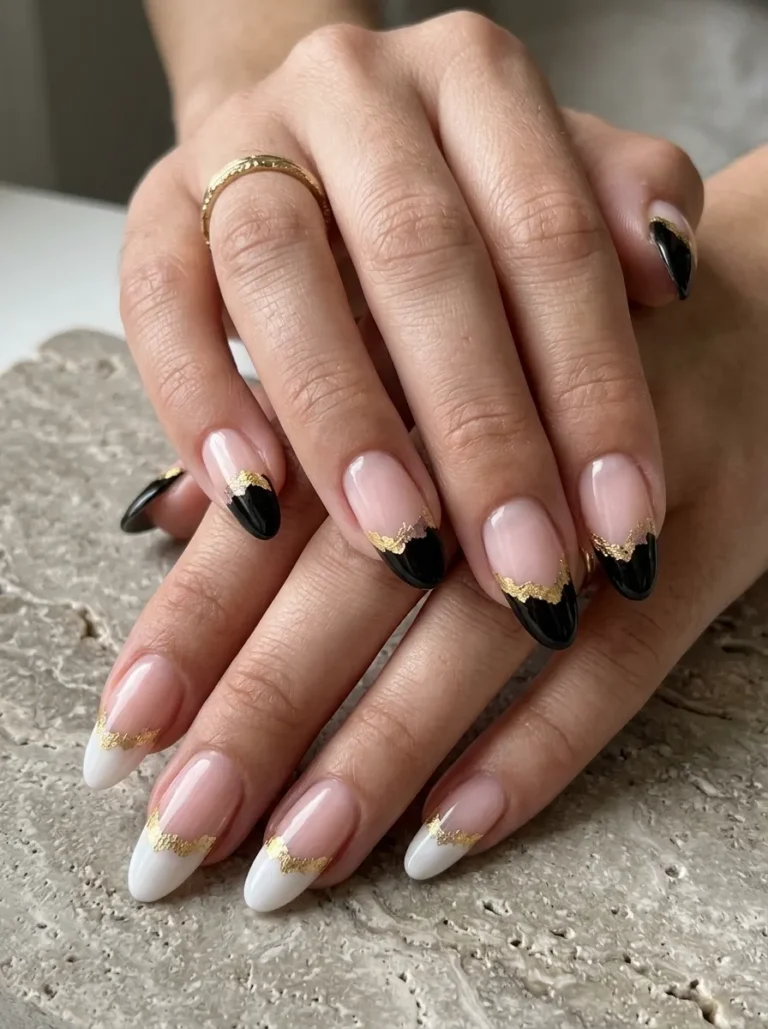
Black French tip nails
5. Sharp black tip
Black French tip nails feel graphic and a little bit rock and roll. Keep the base clear or barely pink, because the contrast is already strong. Thin lines look sleek, while thicker lines look bolder.
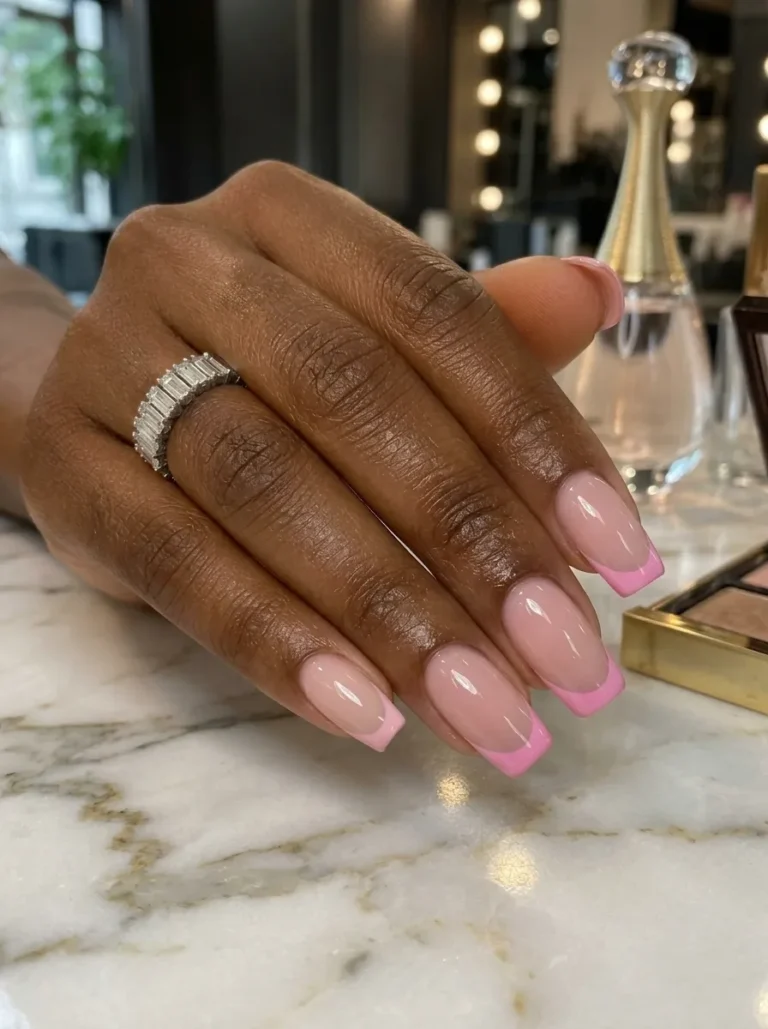
Pink French tip nails
6. Hot pink on nude
Pink French tip nails range from barely there to loud. A bright pink line over nude reads fun without feeling childish. Choose a base close to your skin tone so the tip gets all the attention.
7. Pink ombre tip
Blend a soft pink from the middle of the nail into a deeper pink at the edge. A makeup sponge handles the fade at home. There is no hard line to get wrong, so it forgives shaky hands.
8. Rainbow tips
Paint each nail’s tip in a different color for an easy party look. Stay within pastels if brights feel like too much. Our nail designs hub has more ways to mix color across one hand.
9. Seasonal color tips
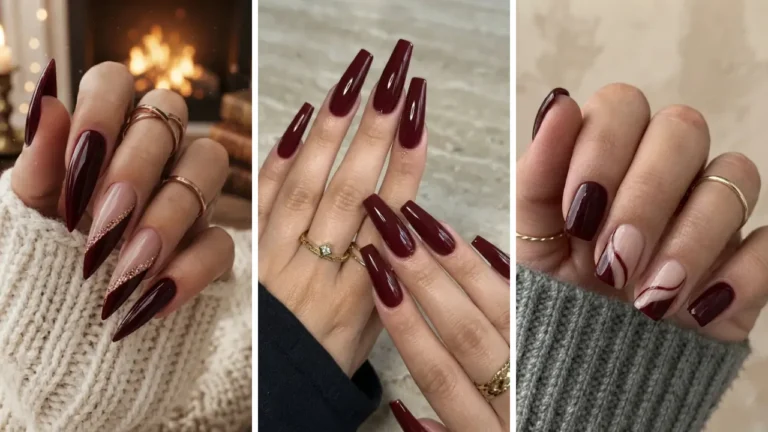
Thin red or forest green tips make a neat holiday version without any characters. See our Christmas nails guide for more festive color ideas. In fall, try burgundy or rust instead, and our burgundy nail designs can help you pick the shade.
Finish and shape twists
Chrome French tip nails
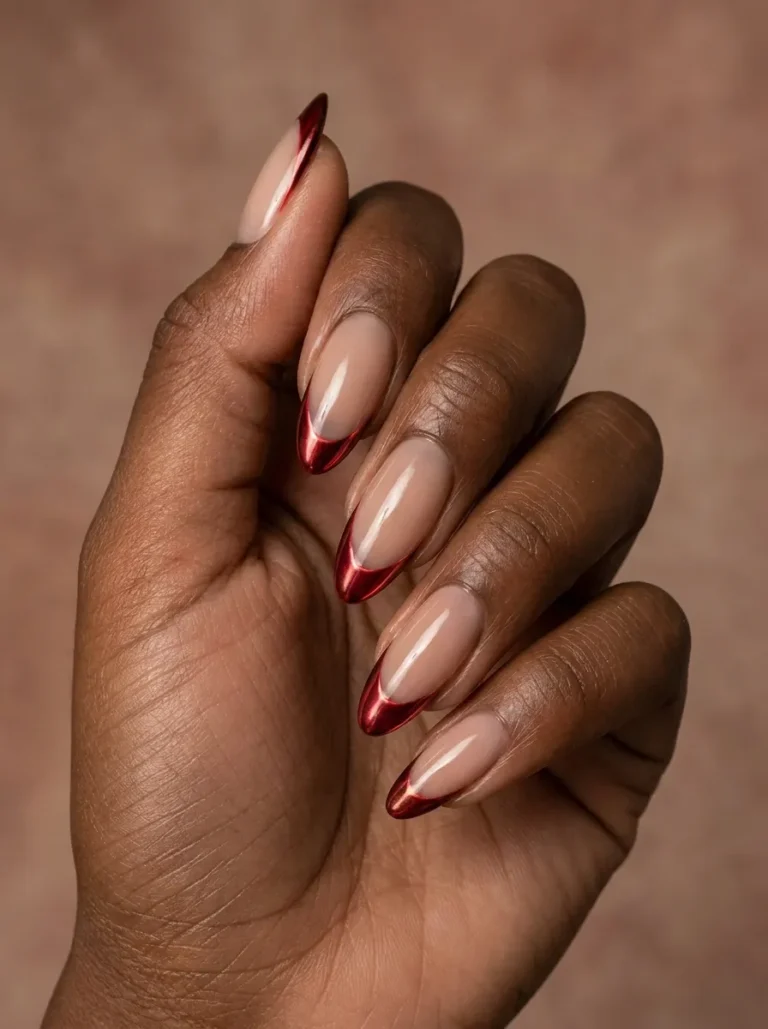
10. Mirror chrome tip
Chrome French tip nails add shine at the edge only, so the look stays wearable. Chrome powder needs a gel base and a cured top coat, so this is usually a salon job. See our chrome nails guide for more on the finish.
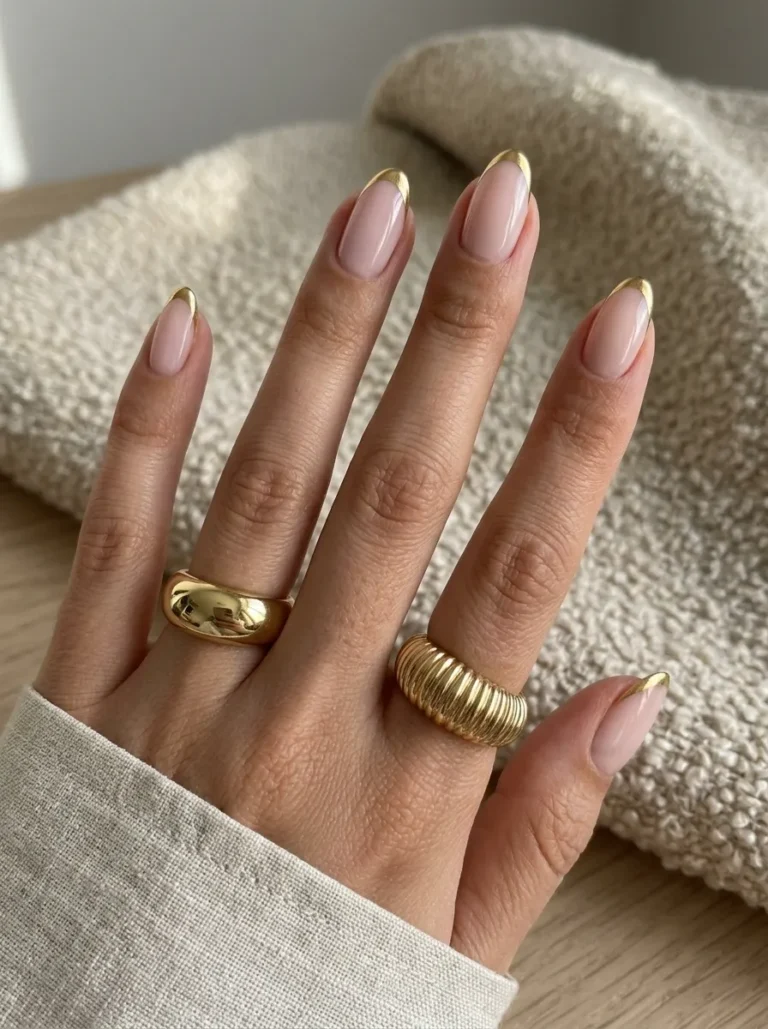
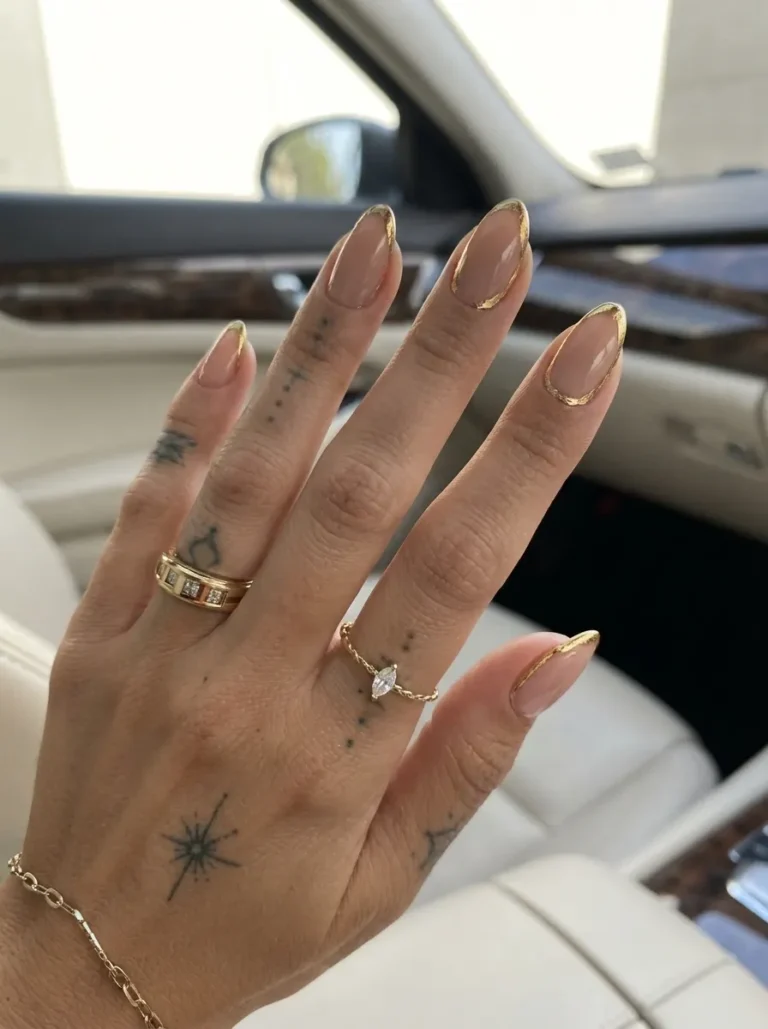
11. Gold line French
A fine gold line replaces the tip or traces it. It suits evening outfits and holiday parties. Try our gold nails post if you want more metallic ideas.
Almond French tip nails
12. Soft almond French
Almond French tip nails follow the taper of the shape, so the line curves naturally to a point. Keep the tip thin to make fingers look longer. This shape needs some natural or added length to look balanced.
13. Double line almond
Add a second fine line just below the main tip, with a small gap between. It looks detailed but stays simple. A striping brush makes it easier, and a nail tech can do it quickly.
Short French tip nails
Short French tip nails can look just as polished as long sets. Keep the line thin, since a thick band shortens the nail visually.
14. Rounded short French
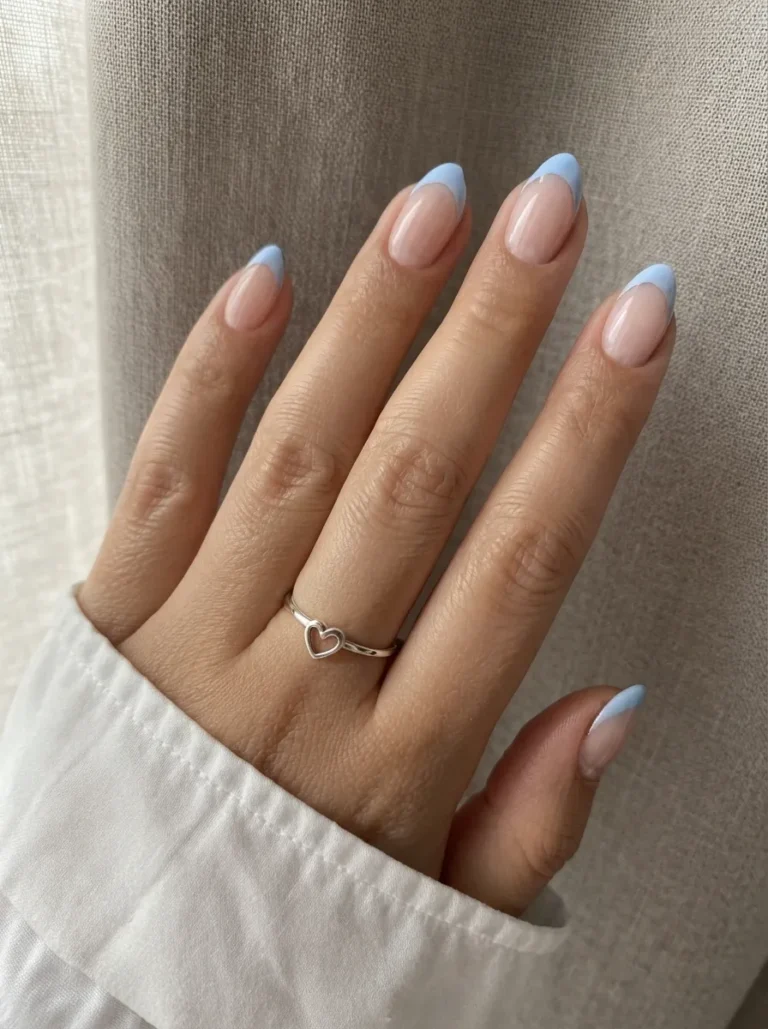
Round or squoval shapes suit short nails best. Choose a sheer base and a line that follows your natural smile line. Light blue can be a pretty change from white, and our light blue nail ideas show the shade range.
Quick guide: Which French tip fits your nail?
Nail shape
Tip style to try
Why it works
Short round
Micro or thin colored tip
Keeps the nail from looking shorter
Squoval
Traditional white or milky
Clean and easy to maintain
Square
Straight or deep smile line
The corners frame the line well
Almond
Soft curve or double line
The line follows the taper
Coffin
Bold color or chrome
The flat tip gives more room for color
Picking a base shade: A base that is close to your skin tone makes the tip look cleaner. Our guide to nail colors for dark skin can help with shades that flatter deep tones.
How to paint French tips at home
You do not need perfect hands. You need a system and a little patience.
Prep the nail. Remove old polish, shape the nail and gently push back the cuticles. Wipe the surface with remover.
Apply the base. Use a base coat, then a sheer or milky color. Let it dry well, since a wet base can drag when you paint the tip.
Mark your line. Use French tip guide stickers, or press a small piece of tape across the nail. A silicone stamp also works, if you have one.
Paint the tip. Use a thin brush and work from one side to the center, then from the other side to the center. Two passes look neater than one long swipe.
Clean the line. Dip a small flat brush in remover and sharpen the edge. Do this before the polish fully dries.
Seal it. Add top coat over the whole nail and swipe it across the free edge. That step helps stop chips at the tip.
Stamp trick: Coat a soft silicone stamp in polish, then press your nail tip into it at an angle. It makes a curved line in seconds. Test the angle on paper first, since too much pressure makes a thick line.
Which French tip for which occasion?
The same structure can dress up or down, so choose by where you are headed.
For work, a milky base and a micro tip stay quiet in meetings and on video calls. Regrowth is subtle too, which helps if your schedule is packed. For a wedding, the traditional white tip or a soft ombre photographs cleanly and will not compete with your dress or your bouquet. Book a trial if you are the bride, so you can see the shade in daylight.
For a vacation, bright color tips feel playful against a tan and look good next to swimwear. Pedicures can match or simply echo the color. For a night out, black tips or chrome lines add drama without a full set of nail art.
Fixing the most common French tip problems
Is one tip thicker than the others? Paint over the thin ones to match, rather than trying to shave down the thick one. Does your line look wobbly? Run a clean-up brush along the bottom edge, then add a fine gold or white line to hide what remains. If the tip looks chunky, you may be using too much polish, so wipe the brush on the bottle neck first.
Yes. Keep the tip thin and follow your natural nail line. A thick tip can make short nails look shorter, so micro styles are usually the safest choice.
It depends on the product and on how you use your hands. Gel typically lasts longer than regular polish. Sealing the free edge with top coat helps either one.
Soft milky bases hide regrowth better than sheer pink over bare nail. Tips also move up as the nail grows, so a thin line buys you some extra time. Rebalance at your next appointment.
People use these terms in different ways. In general, a classic French has a stronger white line, while an American manicure uses softer, more blended tones. Show your nail tech a photo so you both mean the same thing.
Written by Scott Marshal. Edited by Abdullah Muneef. These notes reflect general nail-care practice. We only say we tested a product when someone on our team actually did. Send corrections to info@elitsmedia.com.