Going short is the rare style decision that changes your mornings as much as your mirror. Short haircuts for women range from a chin-length bob to a close crop, and each asks for different upkeep. Use this guide to find the shape that suits your hair, your face and your actual routine.
Cuts that follow your natural texture are usually easiest. Wavy hair does well in a shag, while straight hair often suits a blunt bob. Fine hair can look fuller with short layers. Ask your stylist how much daily styling each option needs before you commit.
Short haircuts by shape
These short haircuts fall into three families. Each one links to a deeper guide if you want more options.
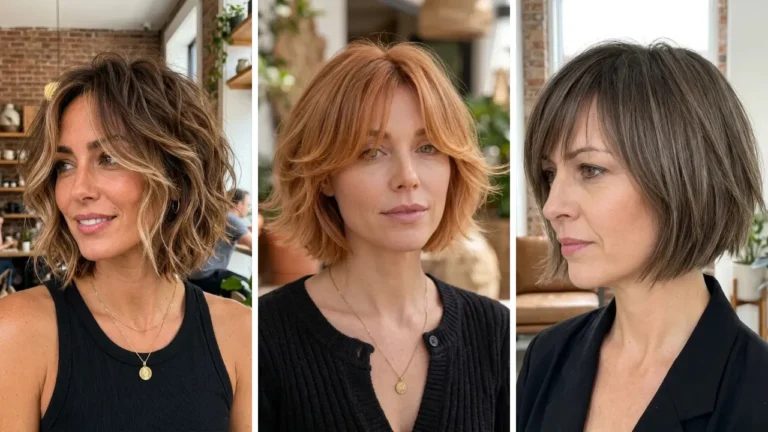
Short bob haircuts
1. Blunt chin-length bob
Short bob haircuts start here. A clean line at the chin makes fine hair look thicker and shows off the jaw. Our guide to the chin-length bob shows how it pairs with bangs.
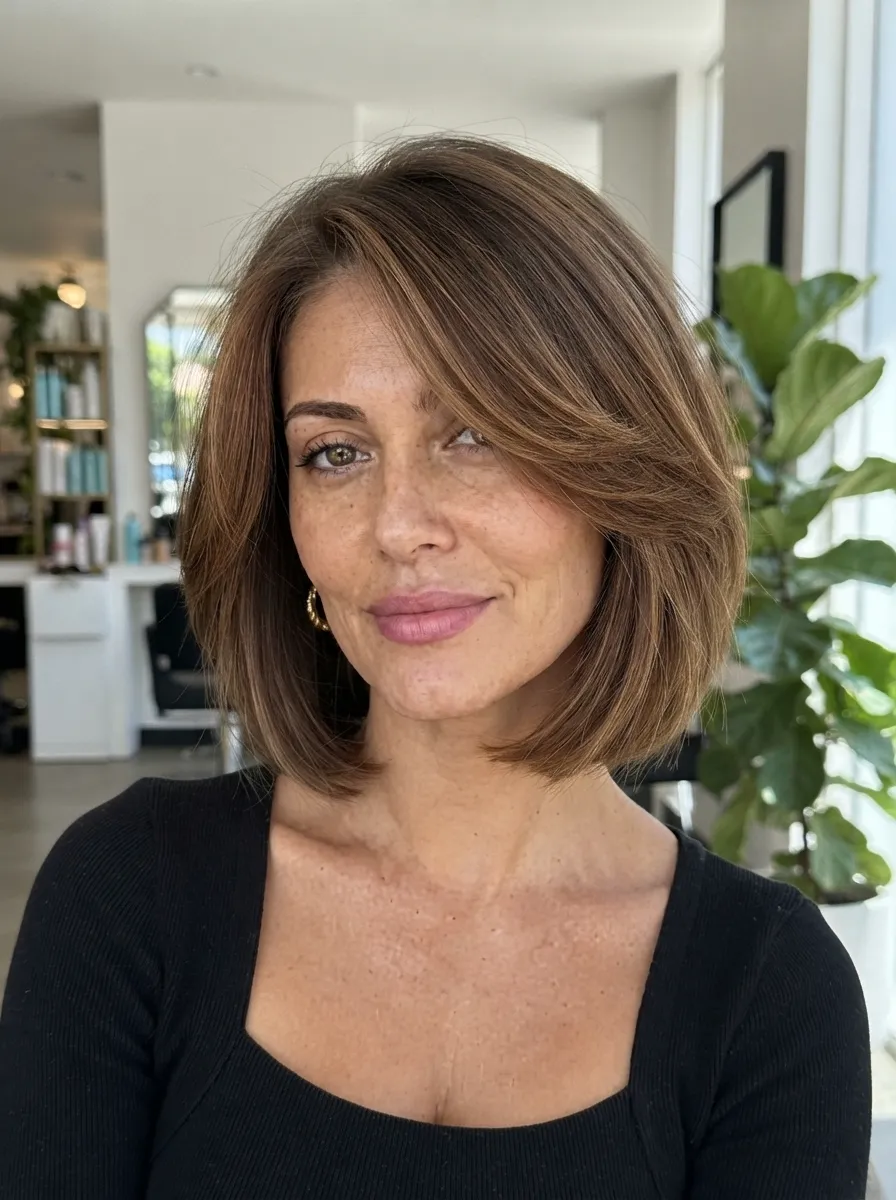
2. Layered bob
Soft layers add movement and stop thick hair from turning triangular. Ask for layers near the ends, not at the crown, if your hair is fine. See our short layered bob ideas.
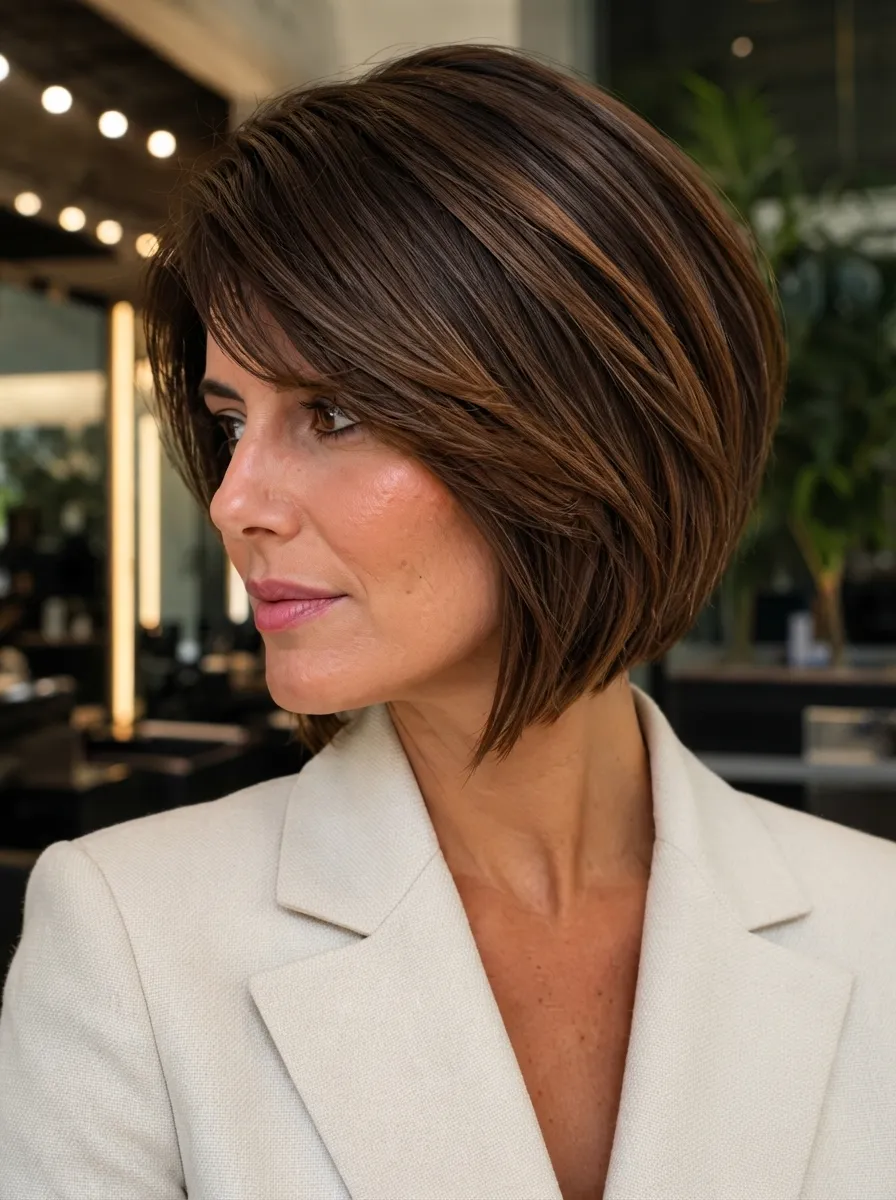
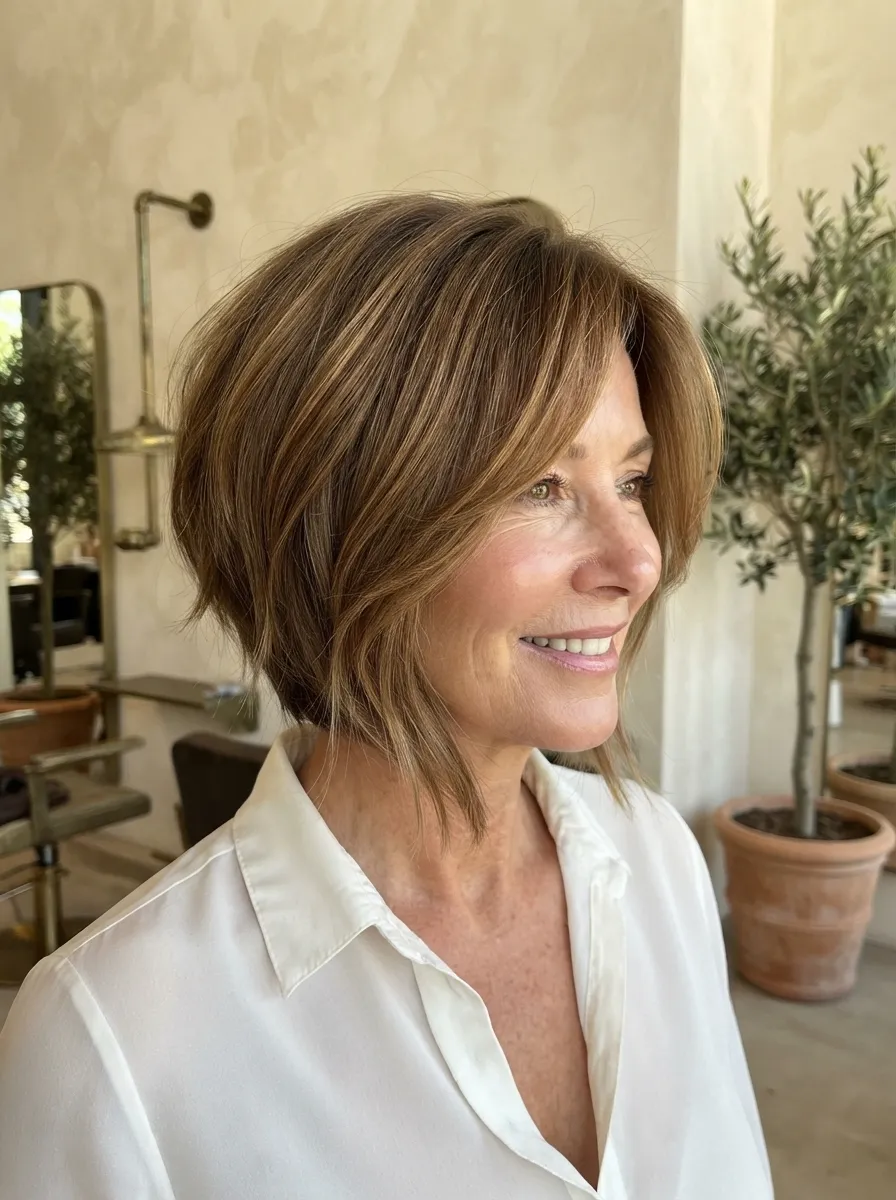
3. Angled bob
The back sits shorter than the front, which adds a sharp line around the face. It looks tailored and needs regular trims to stay sharp. Browse our angled bob styles to compare angles.
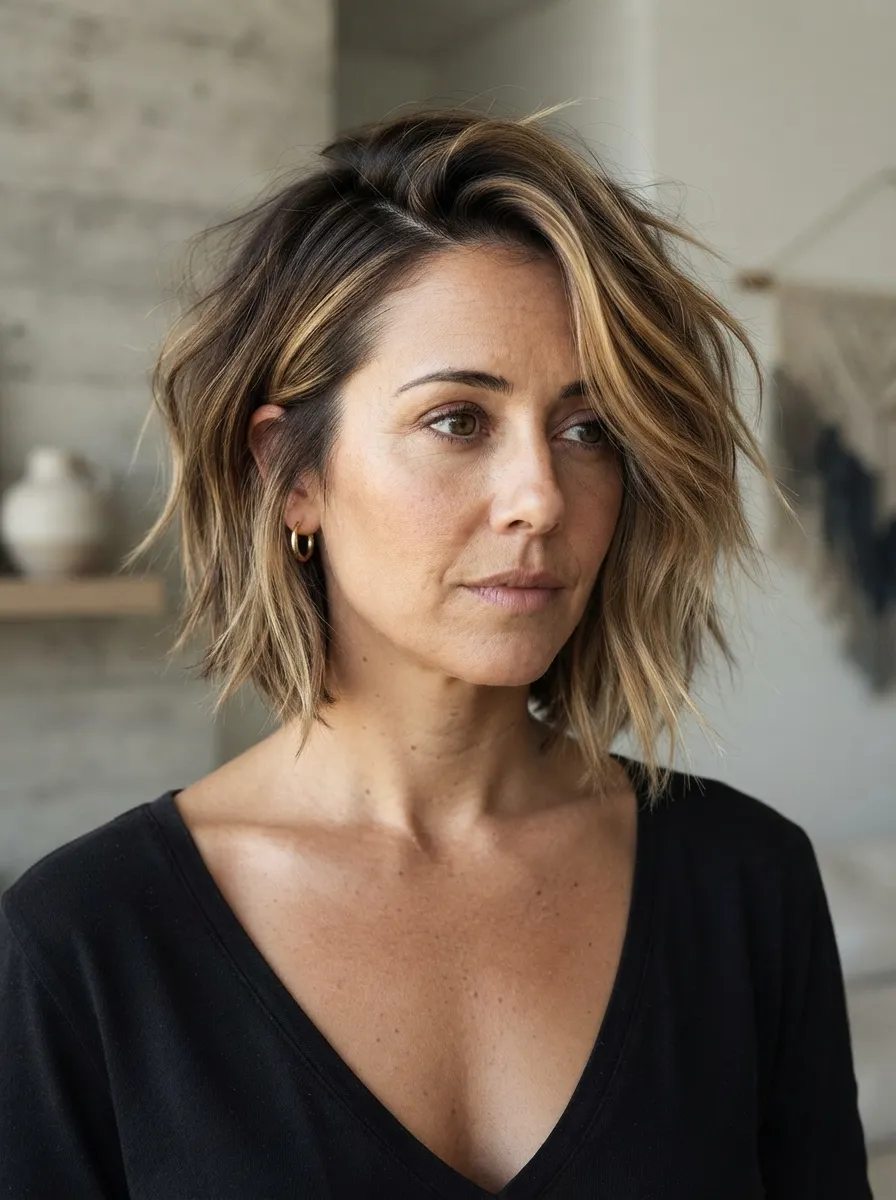
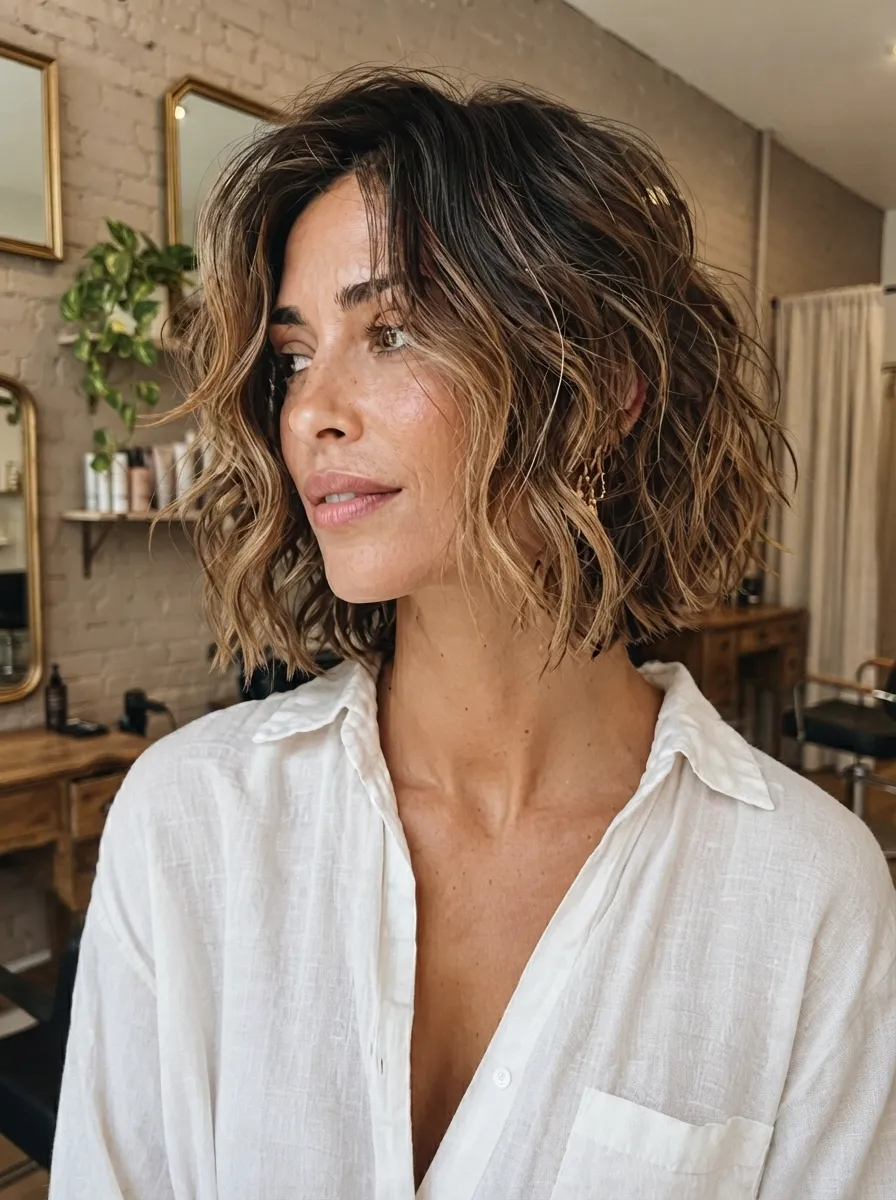
4. Messy choppy bob
Point-cut ends and a little texture spray create an undone look that hides a missed wash day. Our messy bob with choppy layers post covers how to ask for it, and our choppy layered bob guide adds more variations.
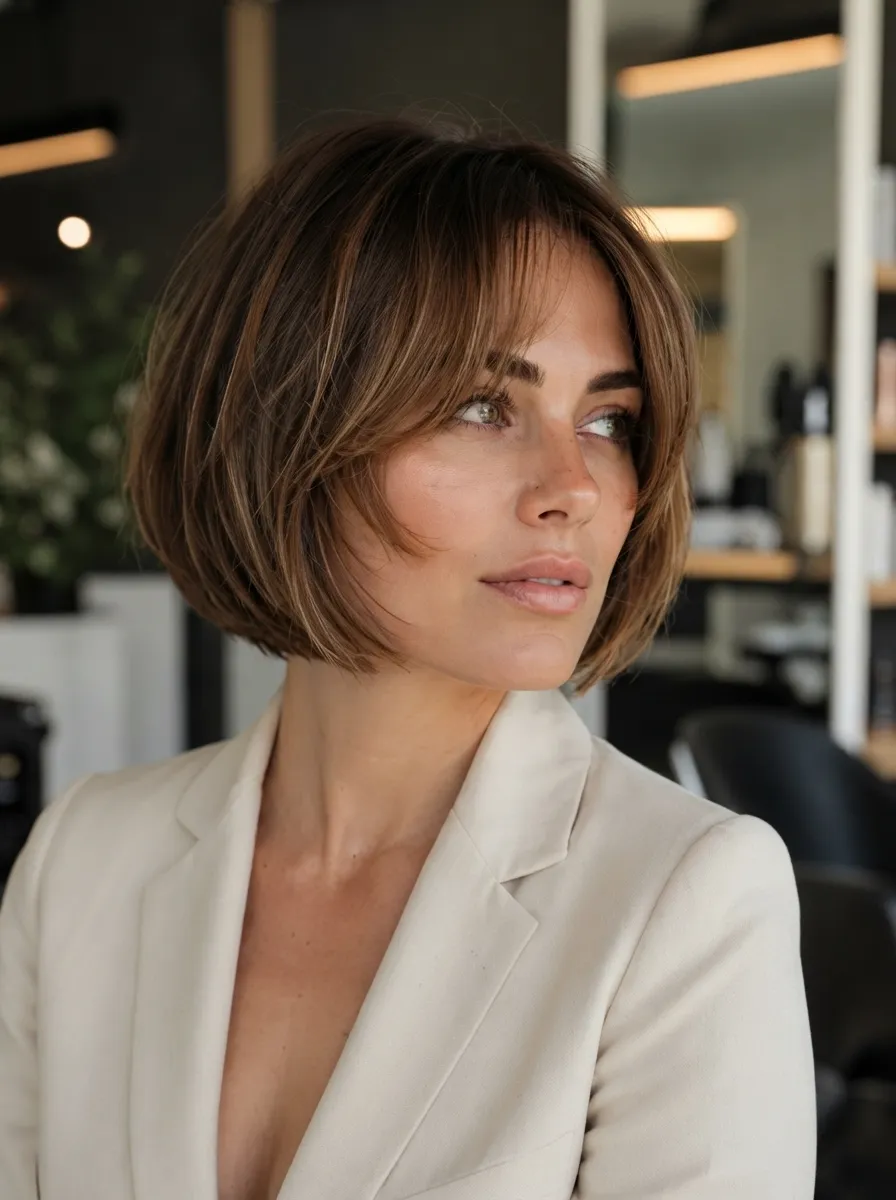
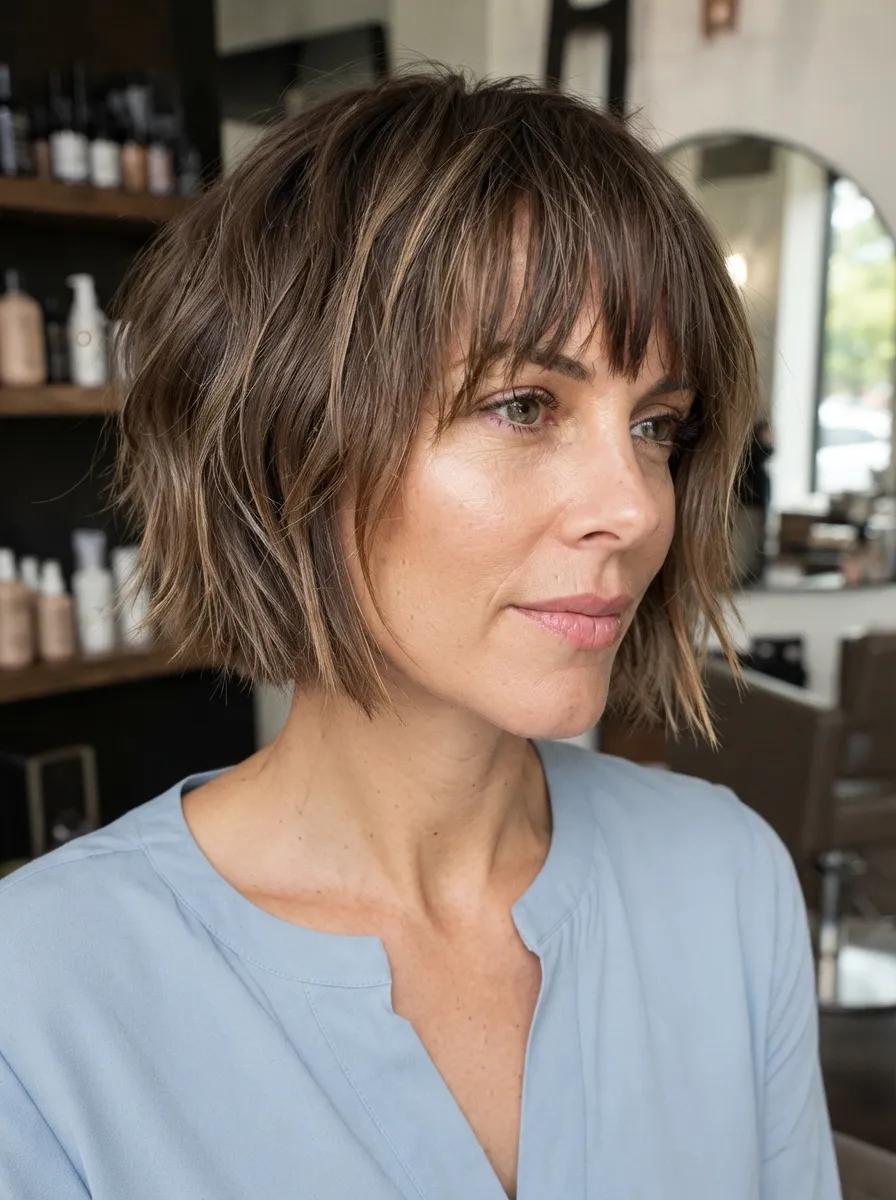
5. Bob with bangs
Adding bangs to a bob changes the proportions fast. Choppy bangs keep the look casual, and our choppy bob with bangs post shows how. Prefer a softer frame? Try curtain bangs on a bob instead.
Pixies
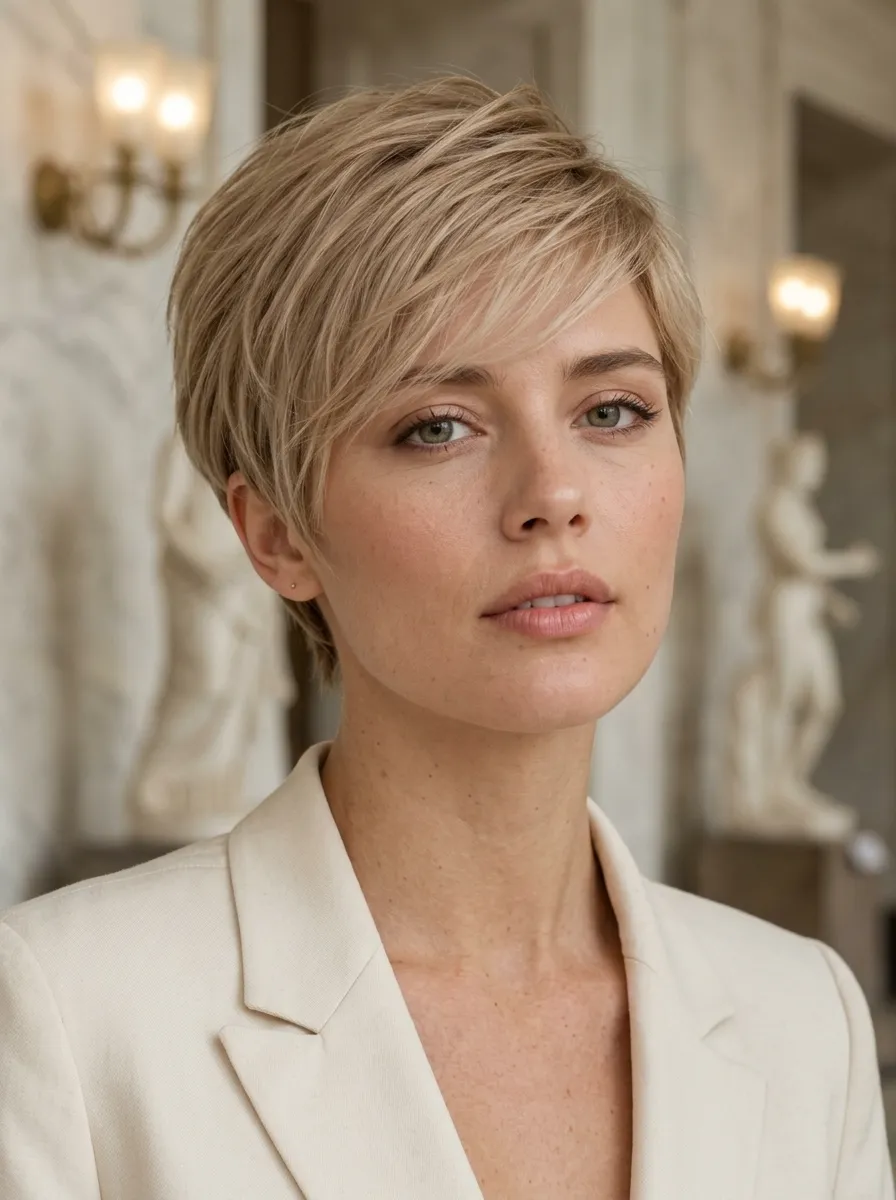
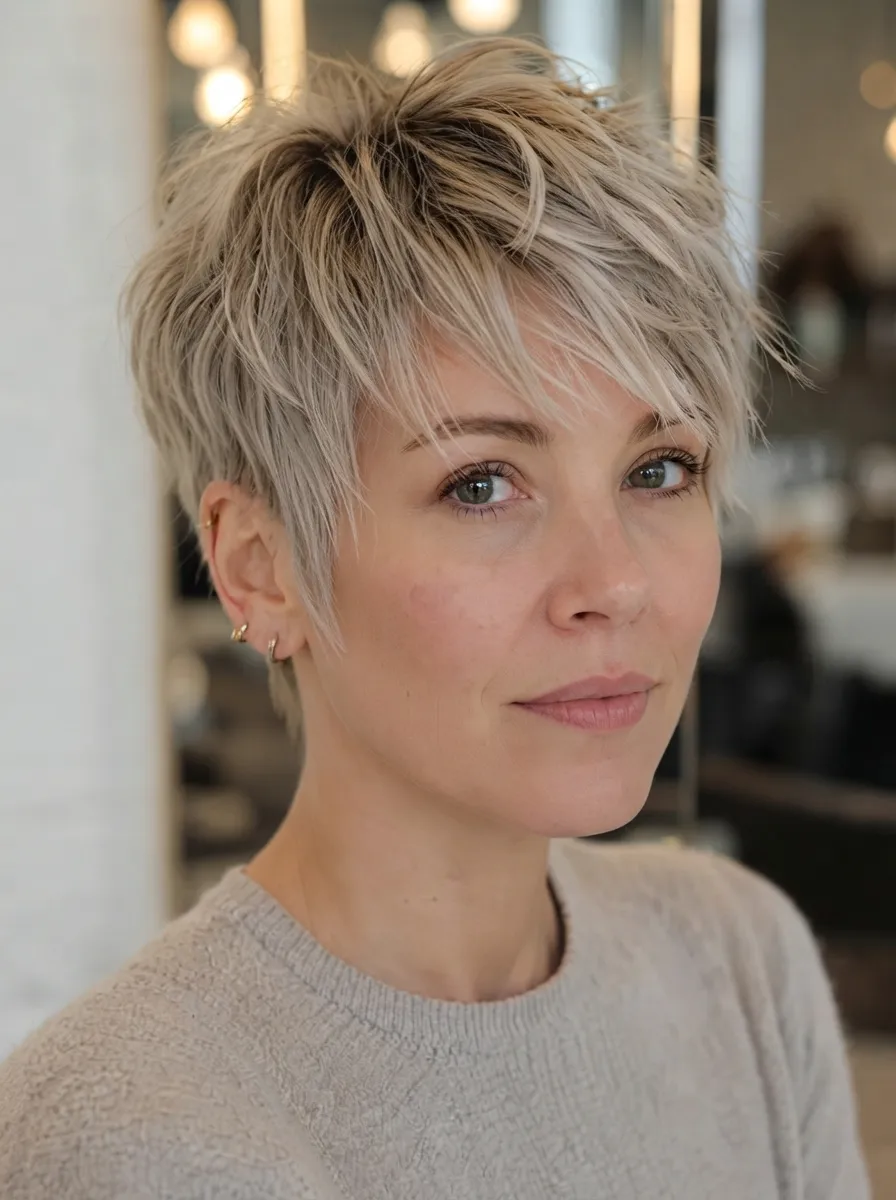
6. Classic soft pixie
A short back and sides with some length on top keeps the look feminine and fresh. It flatters visible cheekbones and suits most hair textures. Trims need to be regular to keep the shape.
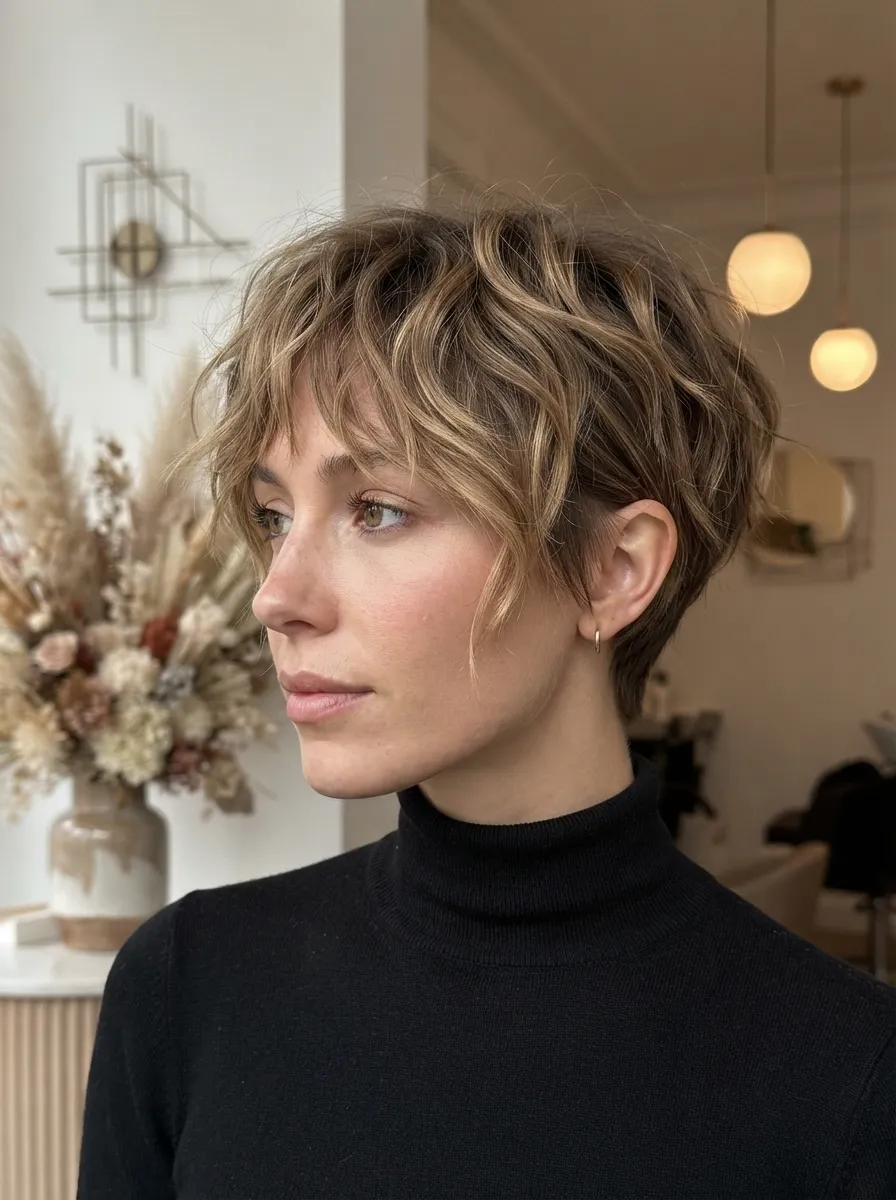
This cross between a bob and a pixie is ideal if you are nervous about going very short. It tucks behind the ears and can grow out into a bob. Ask your stylist to keep the nape neat.
Shags and textured crops
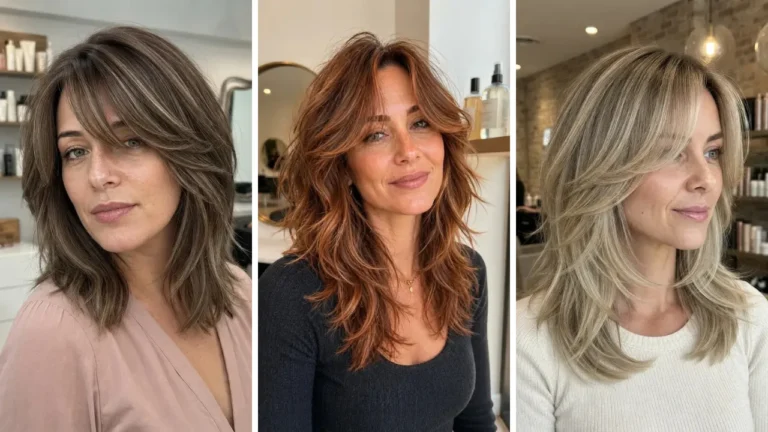
9. Short shag
Short crown layers and wispy ends give you volume at the top and softness at the neck. It works especially well on wavy hair. See our short shag haircuts for fine hair for more.
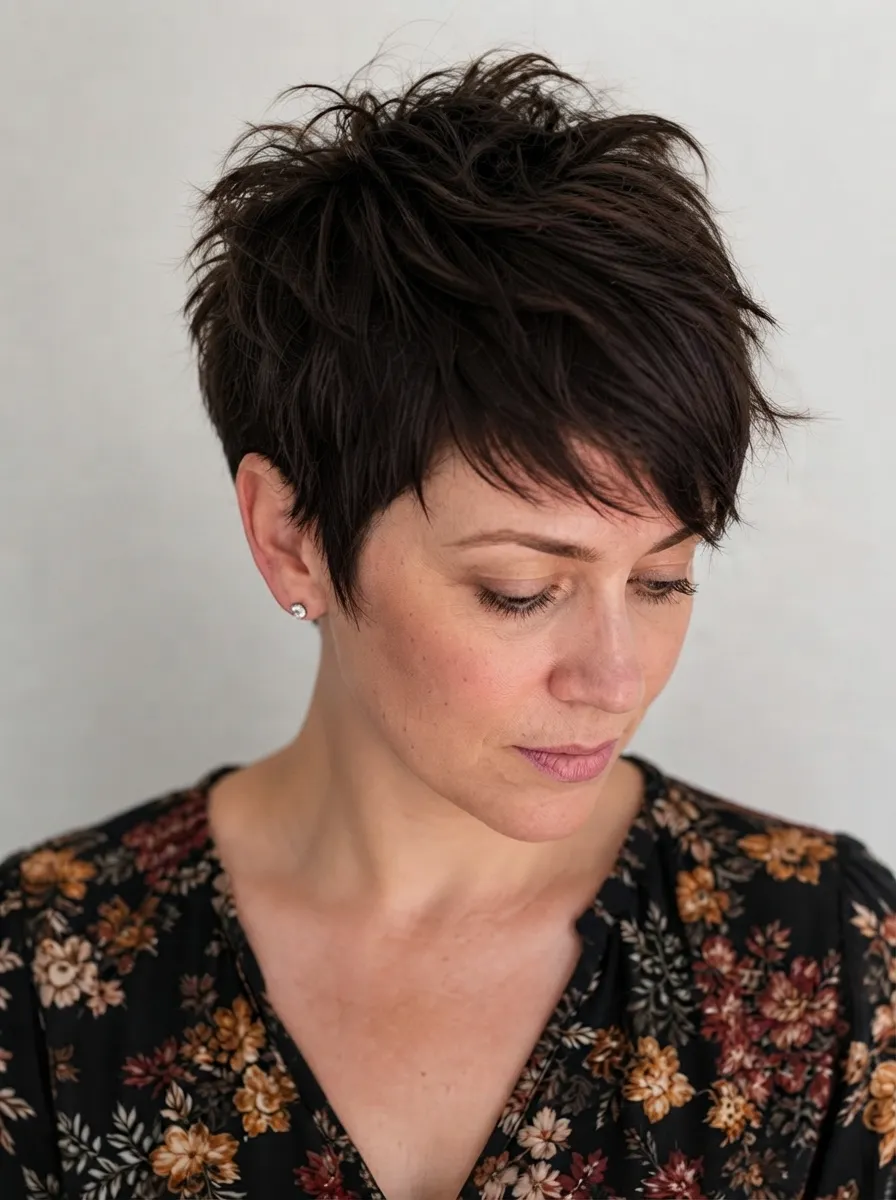
10. Short choppy crop
Uneven, deliberately rough ends look modern and hide cowlicks. A small amount of paste gives it definition. Our short choppy haircuts cover more shapes.
Low maintenance short haircuts
Short hair can still take work, and low maintenance short haircuts are about how they grow out, not just how they look on day one. Choose a shape that follows your natural texture.
11. Wash-and-go wavy bob
Wavy hair can air-dry into a chin-length bob with a little mousse. Layers near the ends help the waves settle. It looks fine a little messy, which makes it a sensible daily choice.
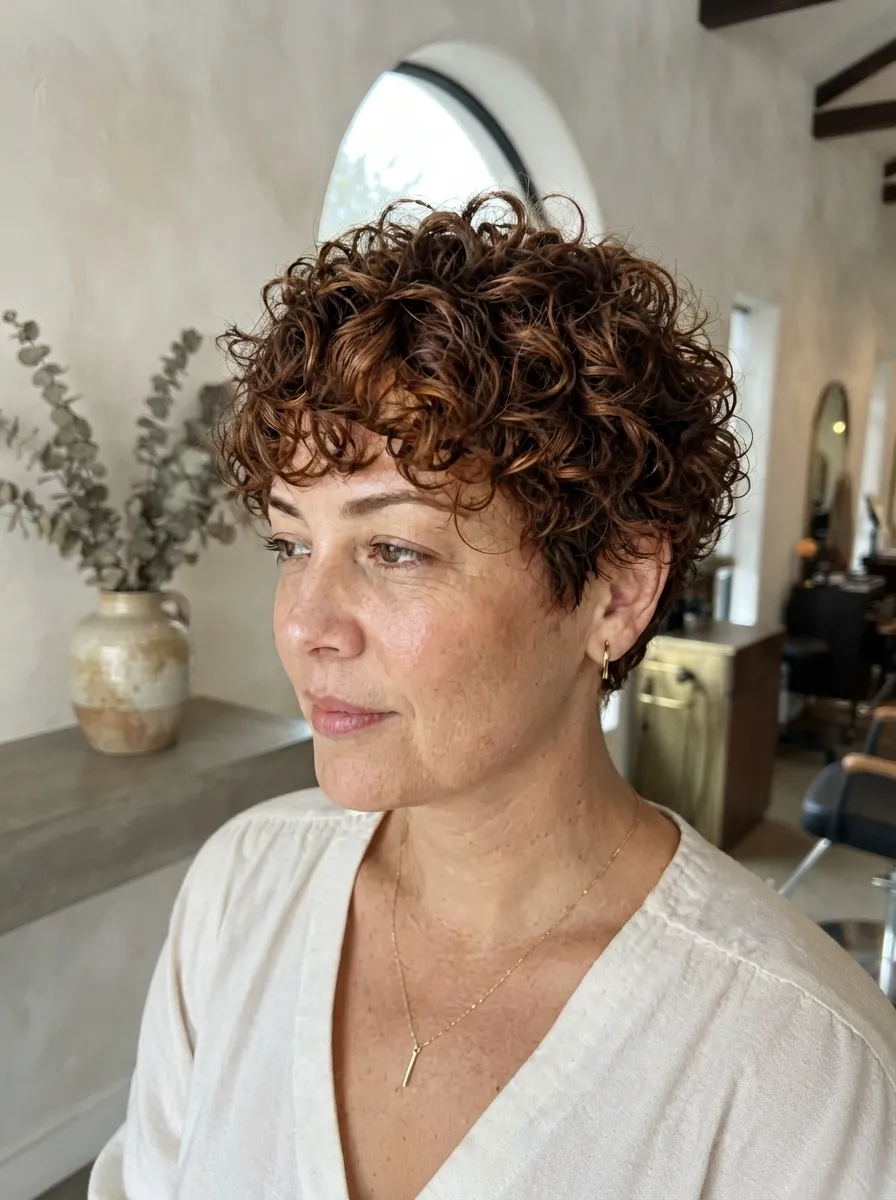
12. Rounded curly cut
A short rounded shape lets curls form a natural silhouette. Ask for a stylist who cuts curls dry so the shape reflects how you actually wear it. Refresh with water and a curl cream between washes.
Short haircuts for women over 60
Short haircuts for women over 60 can show off great bone structure, and they work well with gray or silver hair. There is no age rule on any cut, so choose whatever you like. These two options are simply worth a look.
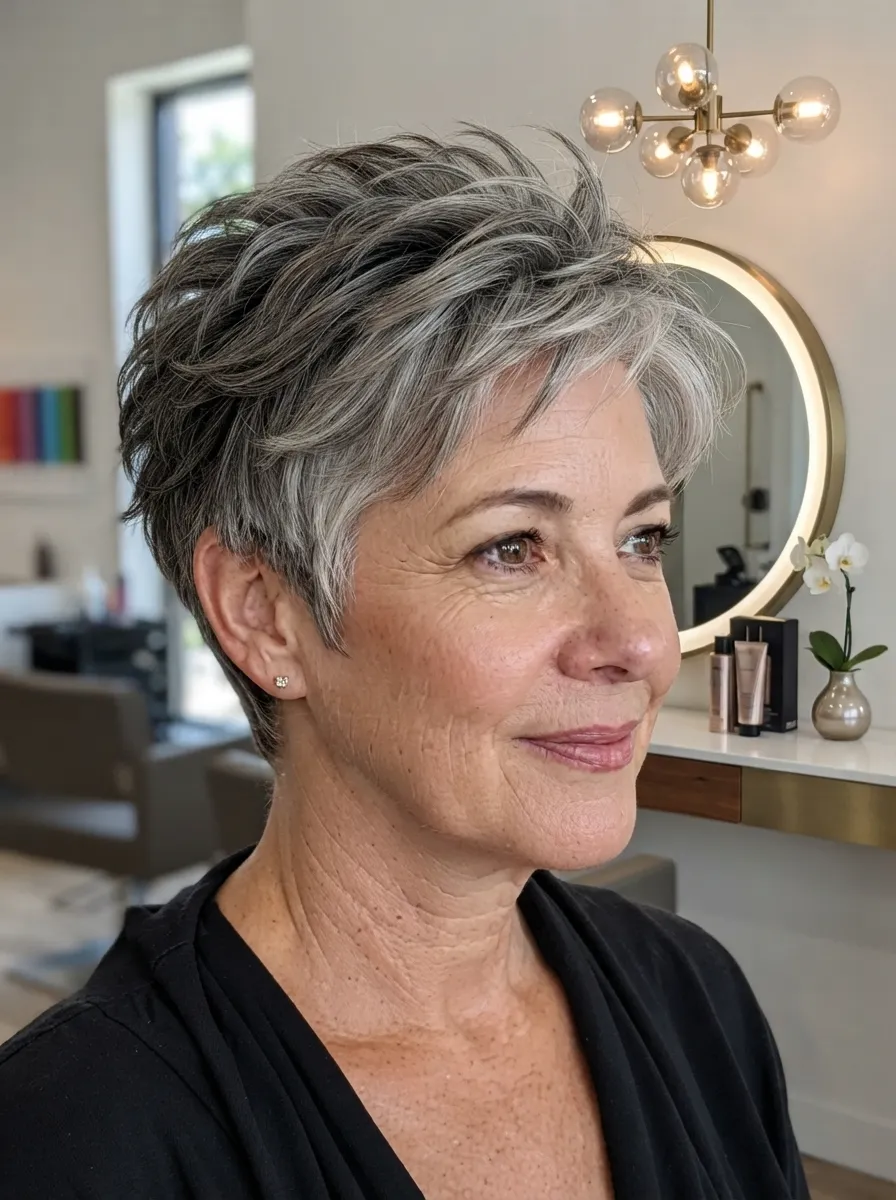
13. Soft layered crop
Layers near the crown add lift, which helps if hair has thinned with age. Many stylists recommend face-framing pieces to soften the look. Our guide to gray hair with lowlights pairs well with this shape.
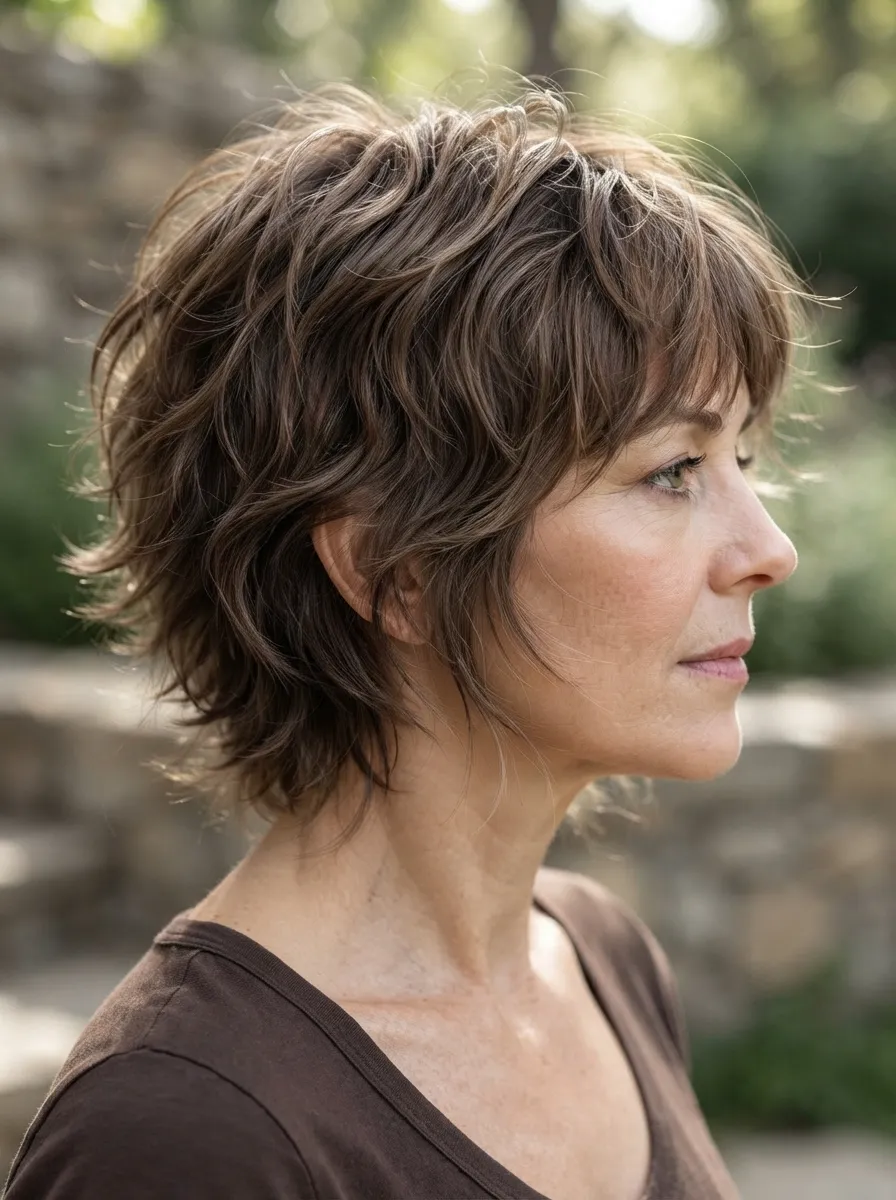
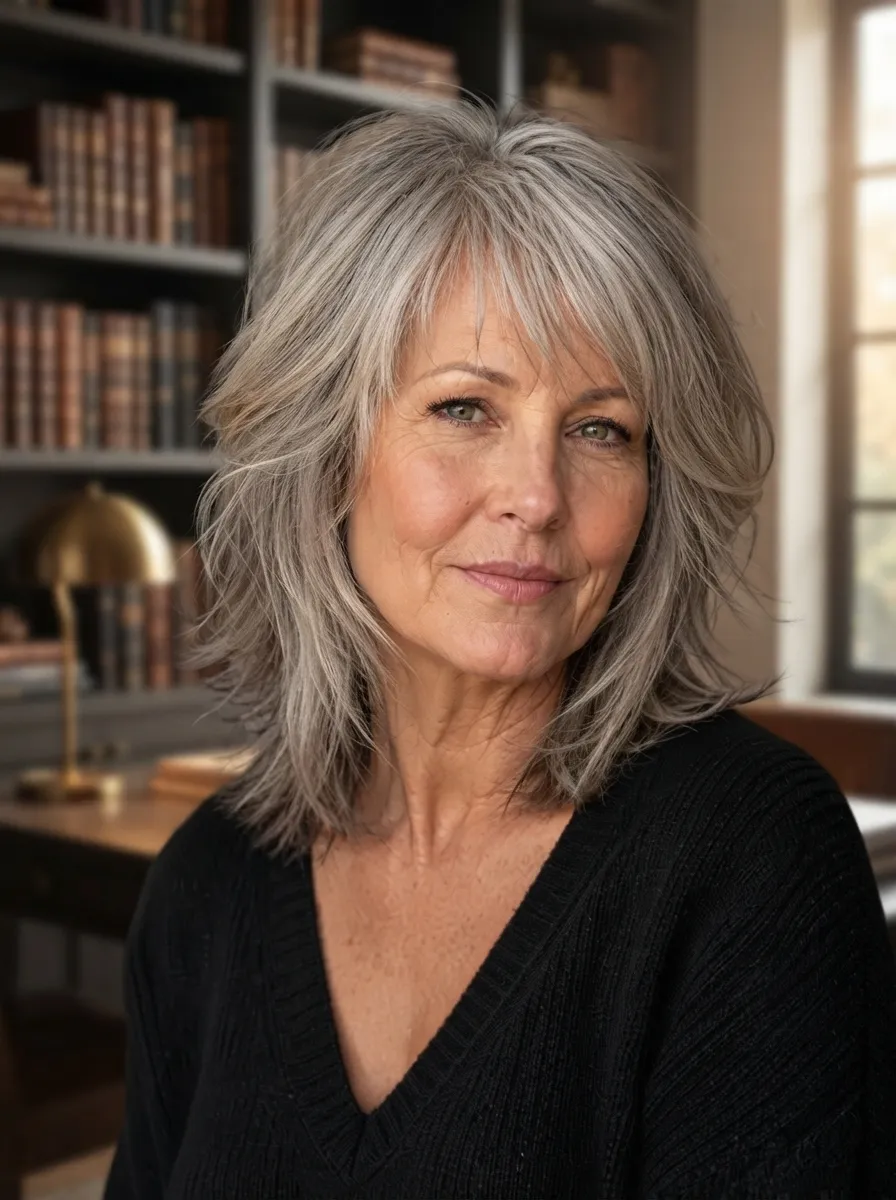
14. Silver shaggy bob
Short haircuts for older women do not have to be severe. A shaggy, chin-length bob feels relaxed and moves easily. Let silver show or add soft lowlights for depth. A gloss can keep gray hair shiny.
Short haircuts for Black women
Short haircuts for Black women can show off natural texture or a sleek silk press. Look for a stylist with experience cutting your hair type, and bring photos on your own hair texture where you can.
15. Tapered natural cut
The sides and back stay close while the top holds curl definition. It is simple to wash and shape at home. Our guide to natural hairstyles has more styling ideas for shorter lengths.
16. Finger waves or a silk-pressed bob
A sleek bob or a pressed pixie gives a polished, glossy finish. Set finger waves in place with gel for a retro look. Limit heat when you can, and use heat protectant to reduce damage.
Match your cut to your hair and face
Hair or face
Try this
Be careful with
Fine hair
Blunt bob, textured pixie
Heavily thinned ends
Thick hair
Layered bob, shag
One-length cuts without weight removed
Wavy hair
Shag, wash-and-go bob
Very blunt lines that fight your wave
Curly or coily hair
Rounded cut, tapered cut
Cuts done only wet, unless your stylist prefers it
Round face
Long pixie, side part, angled bob
Rounded chin-length shapes with heavy bangs
Square face
Soft layers, wispy bangs
Very blunt jaw-length lines
Long face
Chin-length bob, bangs
Very high volume at the crown
Heart face
Chin-length layers, soft bangs
Very short sides with a heavy top
Trial run: Not sure about short hair? Pin your hair up at chin level and study your reflection. Better still, try a wig or a photo preview first. A bob can be cut shorter later, and the reverse takes time.
What to tell your stylist
Bring two photos: one you love and one you do not. Say where you want the shortest and longest pieces to sit, and point at your face instead of using inches. Mention your morning routine. Ten minutes a day calls for a different cut than two minutes.
Ask how often you will need a trim to keep the shape. Pixies and sharp bobs usually need more frequent visits than shags. Then ask for a short lesson on styling your new cut at the chair. A small amount of product and the right brush can make all the difference.
Growing out a short cut without regret
Every short cut goes through an awkward stage, and planning helps. Ask for a shape trim at each visit, even if you want length. Keeping the back shorter than the top prevents a mullet effect. Clips, headbands and small braids help during in-between weeks. Our braided hairstyles guide has options for short lengths, and hair color ideas can freshen the look during the wait. You can find more looks in our style section.
Products that help short hair
Short styles rely on small amounts of the right product. Fine hair often likes a light mousse or texture spray. Thick hair may prefer a matte paste worked through the ends. Curly and coily cuts usually need moisture first, then a cream or gel to hold definition. Start with a pea-sized amount, since short hair can look greasy quickly.
There is no single answer. Soft layers and face-framing pieces suit many people, because they work with your features. A stylist can suggest what fits your hair type and face shape.
Styles with movement and soft layers often feel fresher than very rigid cuts. Personal taste matters more than any rule. Choose the cut that makes you feel like yourself.
It depends on the style. Pixies and sharp bobs usually need more frequent trims than shags or longer bobs. Ask your stylist how long your shape will hold.
Yes. Try a headband, soft waves, slicked-back styling or a jeweled clip. Short hair can also take a small accessory better than long hair, because it sits closer to the face.
Written by Scott Marshal. Edited by Abdullah Muneef. Advice reflects general salon practice. Corrections: info@elitsmedia.com.