This is an editorial guide. We did not test these products.
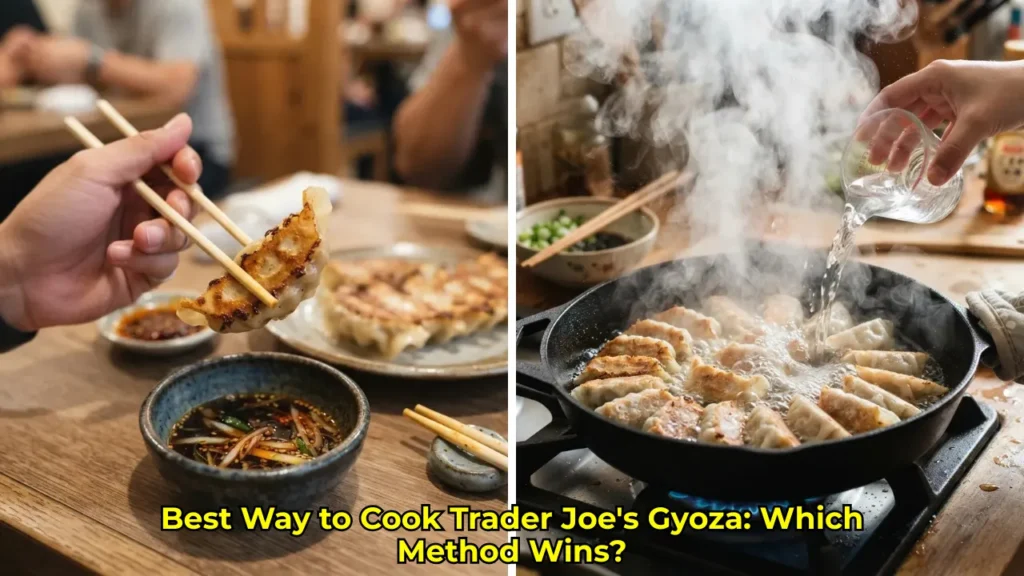
Finding the best way to cook Trader Joe’s gyoza can change a weeknight dinner. Many people drop frozen dumplings into a skillet with a splash of oil and hope for the best. But do the package instructions give the best result, or is there another method worth trying? This guide looks at three popular options.
Three Popular Cooking Methods
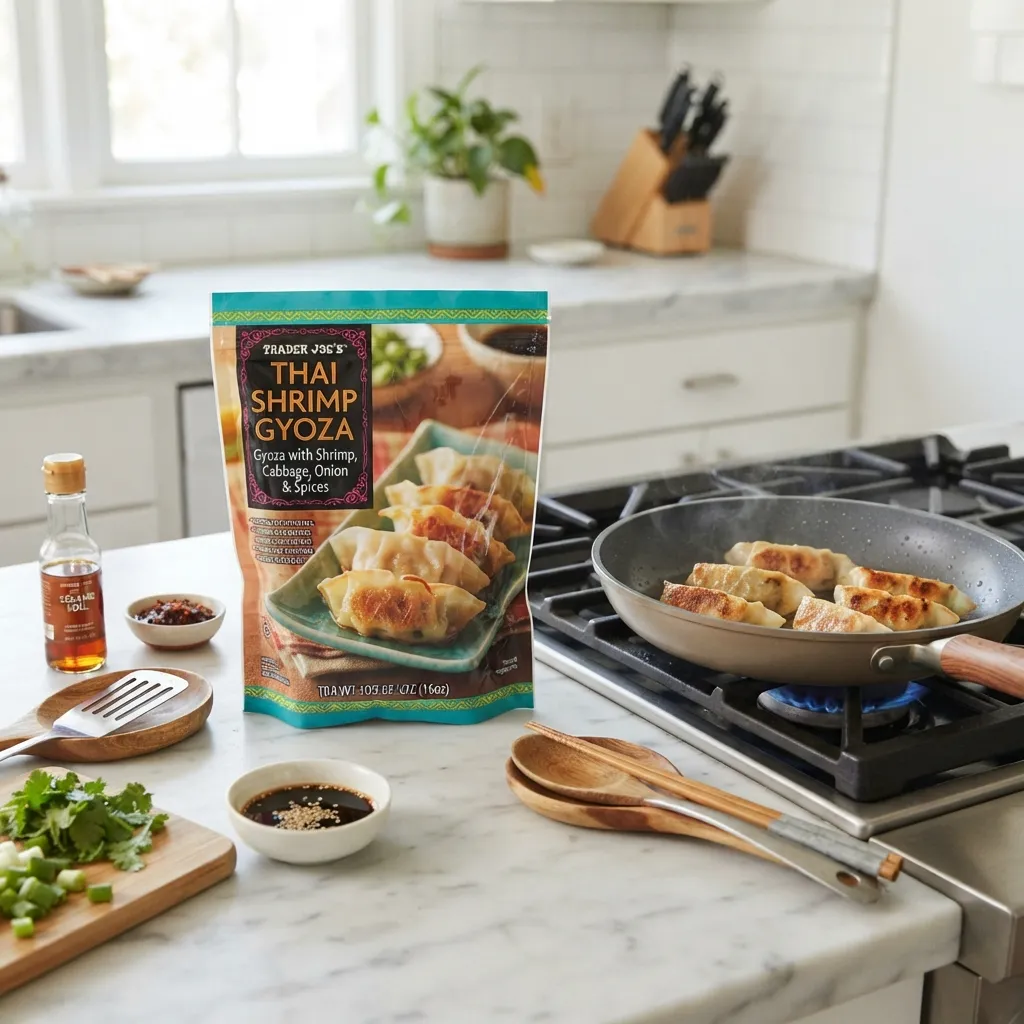
The three approaches below are pan-fry-steam-fry, traditional steaming, and oven-baking. They are commonly used for frozen gyoza, including Trader Joe’s Thai Shrimp Gyoza. Here is what each one is known for when it comes to the best way to cook Trader Joe’s gyoza.
Method 1: The Classic Pan-Fry-Steam-Fry
This is the traditional technique listed on the package. You heat neutral oil in a skillet, place the dumplings flat-side down until golden, add water, cover with a lid to steam, and then let the remaining moisture evaporate.
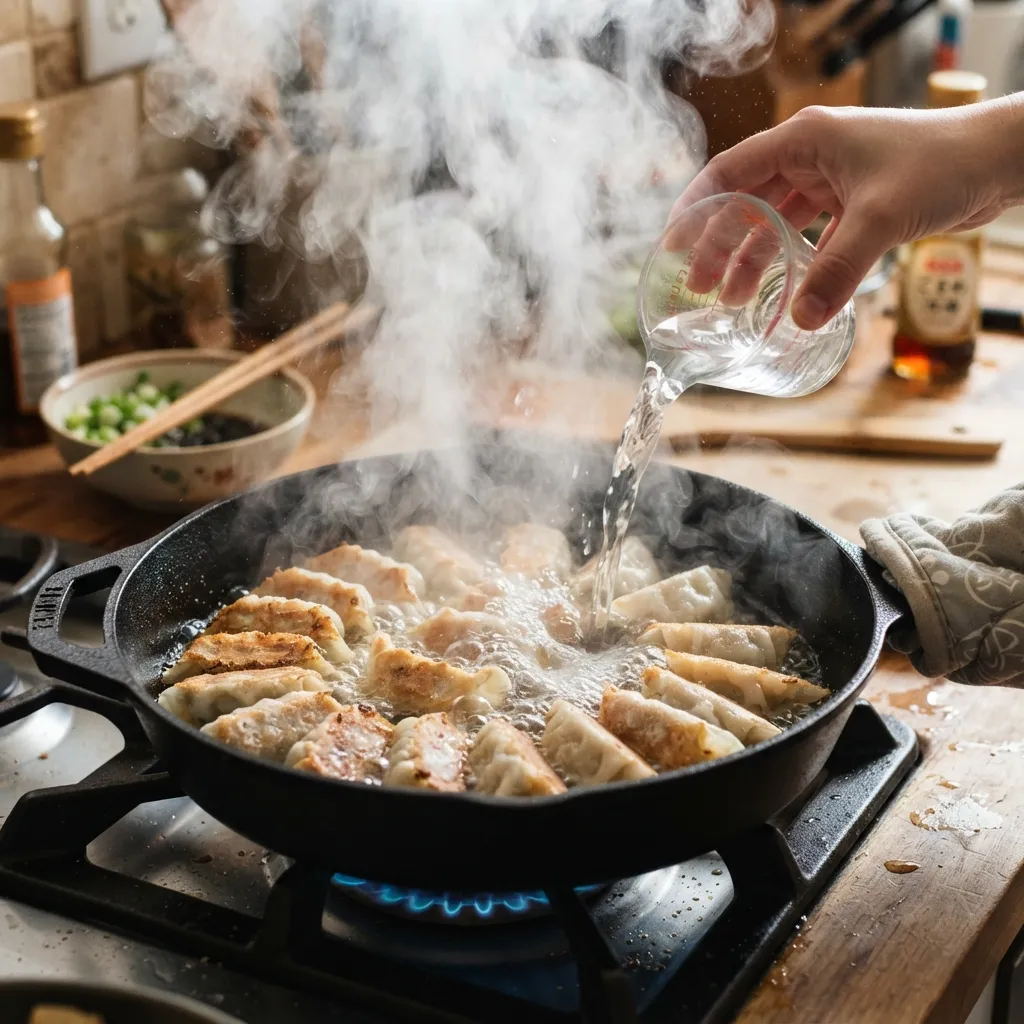
- Time: Around 10 minutes
- Effort: Medium (requires active monitoring)
- Known for: This method is popular for giving a crisp, golden bottom while the steaming step keeps the wrapper chewy and the filling moist. The steaming stage softens the top and the crisp bottom, so it suits people who want a balance of tender and lightly crisp.
Method 2: Traditional Steaming
Steaming is about as straightforward as it gets. You place the dumplings in a steamer basket over a pot of simmering water until heated through.
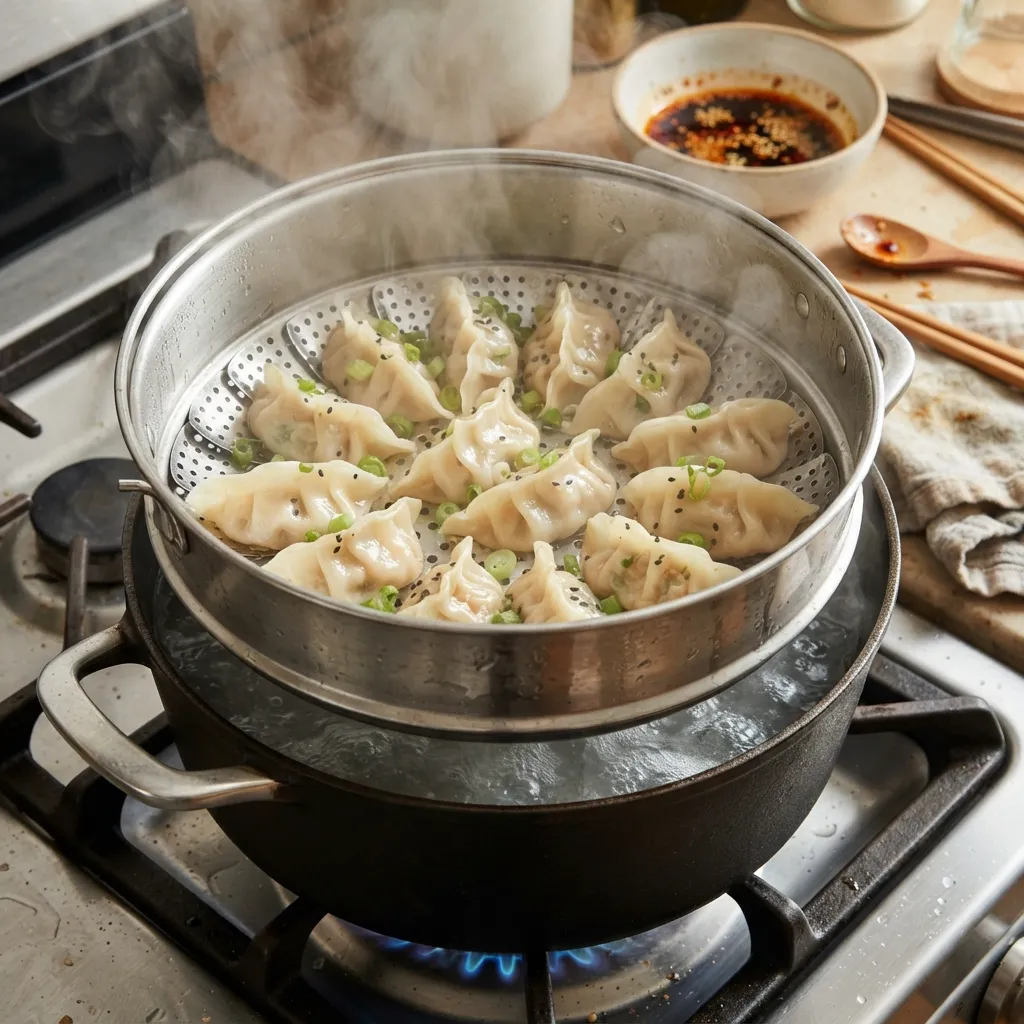
- Time: Around 10 minutes
- Effort: Low
- Known for: Steaming gives soft, delicate wrappers and evenly cooked fillings. Because there is no browning step, the dumplings do not get a crisp texture, and they can stick to the basket if it is not lined or oiled. It may suit anyone who prefers a soft, gentle bite.
Method 3: The Oven-Baked Wild Card
Oven-baking is not listed on the package, but it has gained a following online for frozen dumplings. A common approach is to lightly coat the gyoza in oil, arrange them on a parchment-lined sheet pan, and bake at around 400°F for roughly 15 minutes, rotating the pan halfway through. Check the package and your oven for guidance on timing.
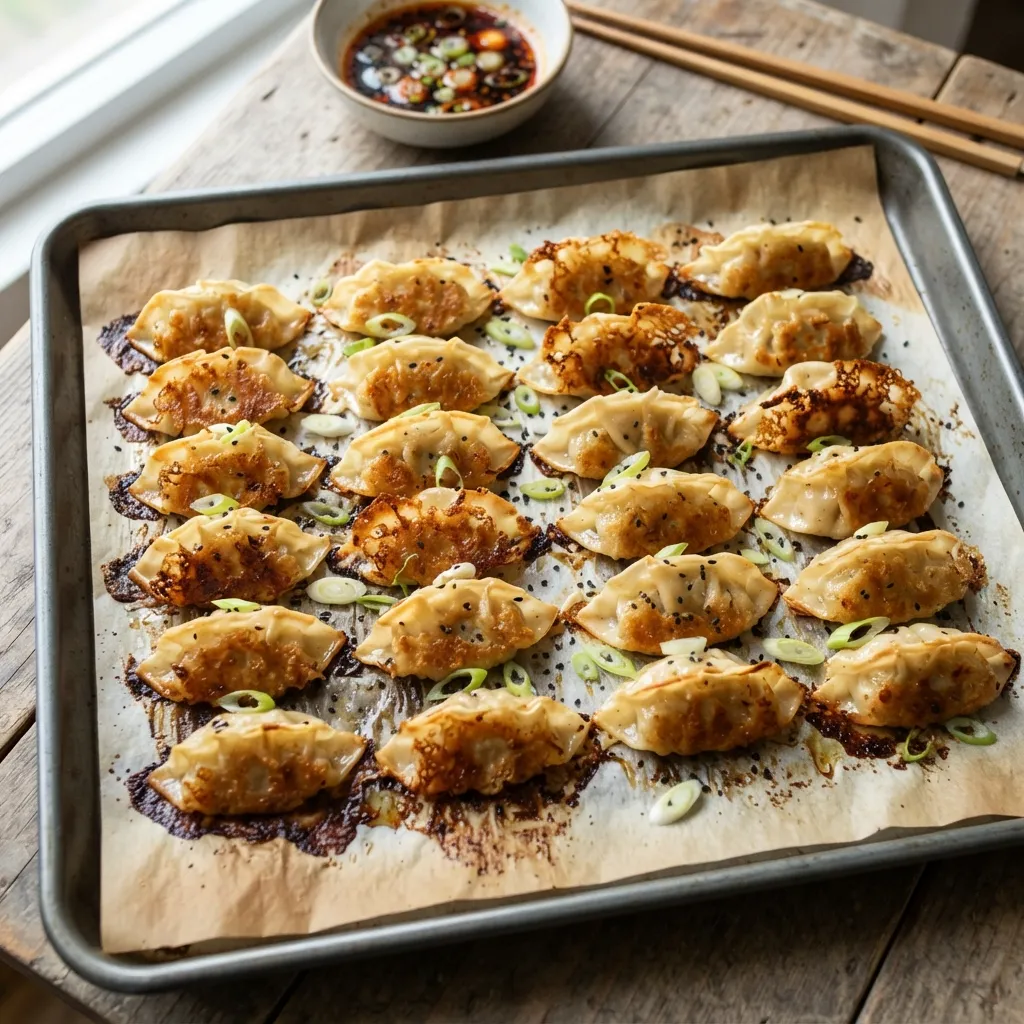
- Time: 15 to 18 minutes
- Effort: Very low (no active flipping or monitoring required)
- Known for: Baking is popular for its hands-off approach, since the dumplings can cook in a single batch on one pan. The dry heat tends to give wrappers a golden, slightly firm finish. It may suit cooks feeding a crowd or anyone who wants less cleanup.
Final Thoughts on the Best Way to Cook Trader Joe’s Gyoza
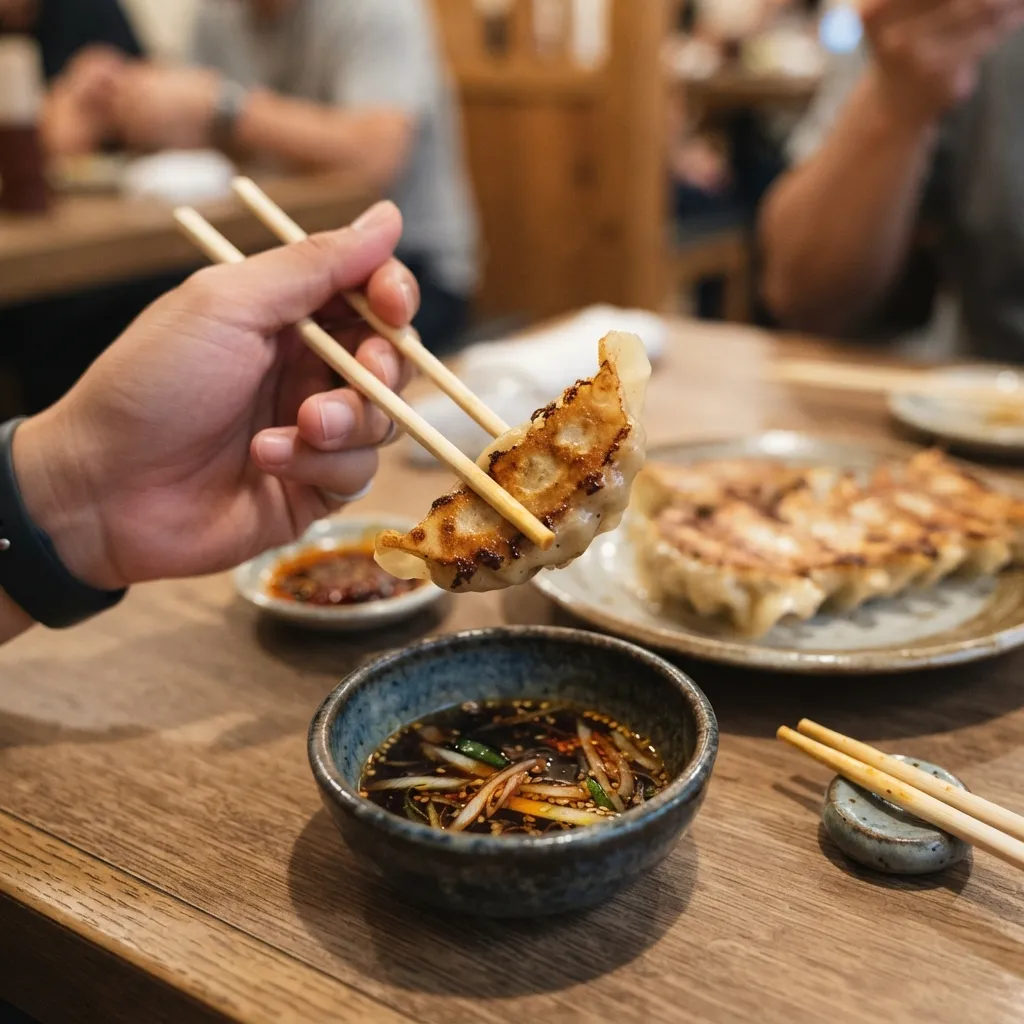
The skillet method is a long-standing classic, and oven-baking is a popular option for people who like an extra-crisp bite. Still, the best way to cook Trader Joe’s gyoza comes down to personal preference. Stick with the skillet for traditional chewiness, use the steamer for delicate softness, or use the oven when you want a crisp finish with minimal effort.
Find more stories like this in our Food section.