


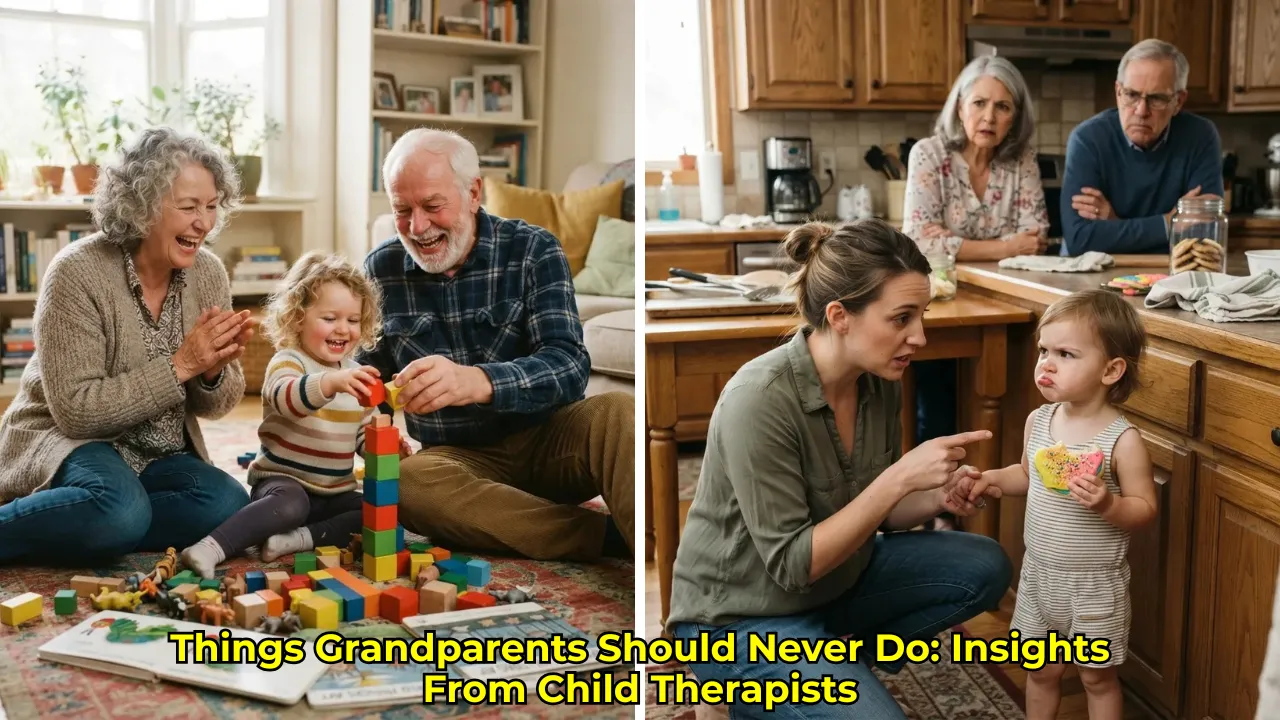
When it comes to family dynamics, things grandparents should never do often stem from a place of pure love, warmth, and the overwhelming desire to spoil their grandchildren. Grandparents hold a uniquely special place in a child’s world, offering unconditional affection, cherished family history, and a comforting presence. However, child therapists point out that even the most well-meaning grandparents can sometimes cross subtle lines that inadvertently harm family boundaries, create confusion, or undermine parental authority. If you or your parents have engaged in these habits without realizing the impact, there is no need to panic. Understanding these boundaries is the essential first step toward building a healthier, more cooperative, and respectful dynamic for everyone involved—especially the children.

The Hidden Impact of Innocent Habits
Grandparents naturally love to shower children with affection, special treats, and a slightly more relaxed set of rules compared to their parents. Yet, mental health professionals emphasize that certain common behaviors, often perceived as harmless, can subtly undermine parental authority and confuse children regarding consistency and safety. Recognizing the specific things grandparents should never do helps bridge the gap between generations, ensuring that the grandparent’s role of “spoiling” kids never evolves into actively undermining the parents’ structure and values.

Encouraging Kids to Keep Secrets
One of the top habits child therapists wish grandparents would stop immediately is asking or encouraging kids to keep innocent “secrets” from their mom and dad. Whether it is sneaking an extra piece of candy before dinner, allowing them to watch a show the parents disapprove of, or staying up past their established bedtime, asking a child to keep a secret creates an uncomfortable and often stressful psychological burden for a young mind.
Children thrive on clarity, predictability, and trust within their family unit. When an adult they deeply love and respect asks them to hide information or deceive their primary caregivers, it blurs essential safety and communication boundaries. Instead of encouraging secrecy, grandparents can model open communication and respect by fully acknowledging and adhering to the rules their children have set, reinforcing the parental team.

Undermining Parental Authority in Front of Kids
Another critical entry on the list of things grandparents should never do involves openly questioning, dismissing, or contradicting parental rules, discipline, or decisions in front of the grandchildren. Grandparents might make comments like, “I don’t know why your parents are so strict about that,” or “Don’t worry, you can have it anyway,” when a parent has already said no. This behavior is highly detrimental as it explicitly signals to the child that the parents’ authority is not absolute or worthy of respect.
This undermining behavior can manifest in small but significant ways, such as consistently offering a food the parent has restricted, allowing access to a toy the parent has put away, or ignoring a timeout or consequence the parent has enforced. It forces children into the difficult position of choosing whose authority to follow, which can lead to anxiety, confusion, and significant behavioral issues.

How to Handle Rule-Bending Positively
It is completely natural and healthy for grandparents to want to loosen the reins a bit during visits and create special, memorable moments that differ from daily routines. However, experts suggest reframing treats, exceptions, and rule-bending carefully to avoid conflict. Instead of invalidating mom or dad in the moment, a supportive grandparent can validate the parent’s rule while explaining the exception gracefully.
For instance, a grandparent could say something like, “I know at home your parents have a rule about no dessert before dinner, but because it’s a special occasion and Mom/Dad said it was okay just for tonight, we can enjoy this treat together.” This approach maintains parental respect, keeps communication channels open, and clearly defines the exception, preserving consistency and showing that the adults are united.

Crossing Boundaries With Unsolicited Advice
Giving feedback and sharing wisdom is common and often valuable in tight-knit families, but constantly criticizing, second-guessing, or overriding modern parenting styles (e.g., regarding sleep training, diet, screen time, or discipline) can significantly strain relationships. While grandparents have vast experience, the landscape of parenting has evolved, and what worked 30 years ago may not be the recommended approach today.
Healthy boundaries benefit the entire household by fostering mutual respect and reducing conflict. Grandparents who respect these boundaries, express their opinions only when genuinely asked, and support the parents’ decisions even when they differ from their own preferences, reinforce the family unit. By focusing purely on showering the children with unconditional love, connection, and positive reinforcement, grandparents can remain an indispensable and beloved anchor in a child’s life without creating unnecessary friction or tension with the parents.