



We have all been there. You are zipping up a tight pair of jeans, posing for a group photo, or just feeling a little self-conscious at the beach. What do you do? You naturally pull your belly button to your spine. However, what starts as a harmless habit to look a bit slimmer can actually lead to serious long-term health issues. If you find yourself constantly sucking in your stomach, you might be setting yourself up for a medical condition known as “Hourglass Syndrome.”

Here at Elits Buzz, we are always tracking the viral wellness trends and uncovering the truth behind our daily habits. Today, we are breaking down exactly why this common aesthetic cheat code is terrible for your body, the surprising symptoms to watch for, and how you can reverse the damage.
Why is Sucking in Your Stomach a Common Habit?
For generations, societal beauty standards have prioritized a flat, toned midsection. This hyper-focus on having a tiny waist leads many people to unconsciously adopt a “stomach gripping” habit. You tighten your upper abdominal muscles to pull everything up and in.
Read More: The Silent Crisis: Male Eating Disorders in Gym Culture Explained

Over time, your brain actually rewires itself. You might not even realize you are holding this tension while sitting at your desk, walking, or scrolling through social media. Unfortunately, chronic stomach gripping creates a massive muscular imbalance that your body eventually pays a steep price for.
The Mental Pressure Behind Sucking in Your Stomach
It is no secret that diet culture and the pressure to appear thin play a massive role. The psychological urge to constantly hide a soft belly turns into a physical tension-holding pattern. This anxiety-driven habit forces the upper abs into a constant state of hypertonicity (extreme tightness), completely altering your core mechanics and paving the way for chronic pain.
What is Hourglass Syndrome? The Physical Toll of Sucking in Your Stomach
When you spend hours a day flexing your upper abs, you can develop Hourglass Syndrome. This isn’t about naturally having an hourglass figure; it is a clinical dysfunction. Because your upper abs become incredibly overworked and tense, your lower abs become weak and lax. This creates an unnatural upward pull on your abdomen.
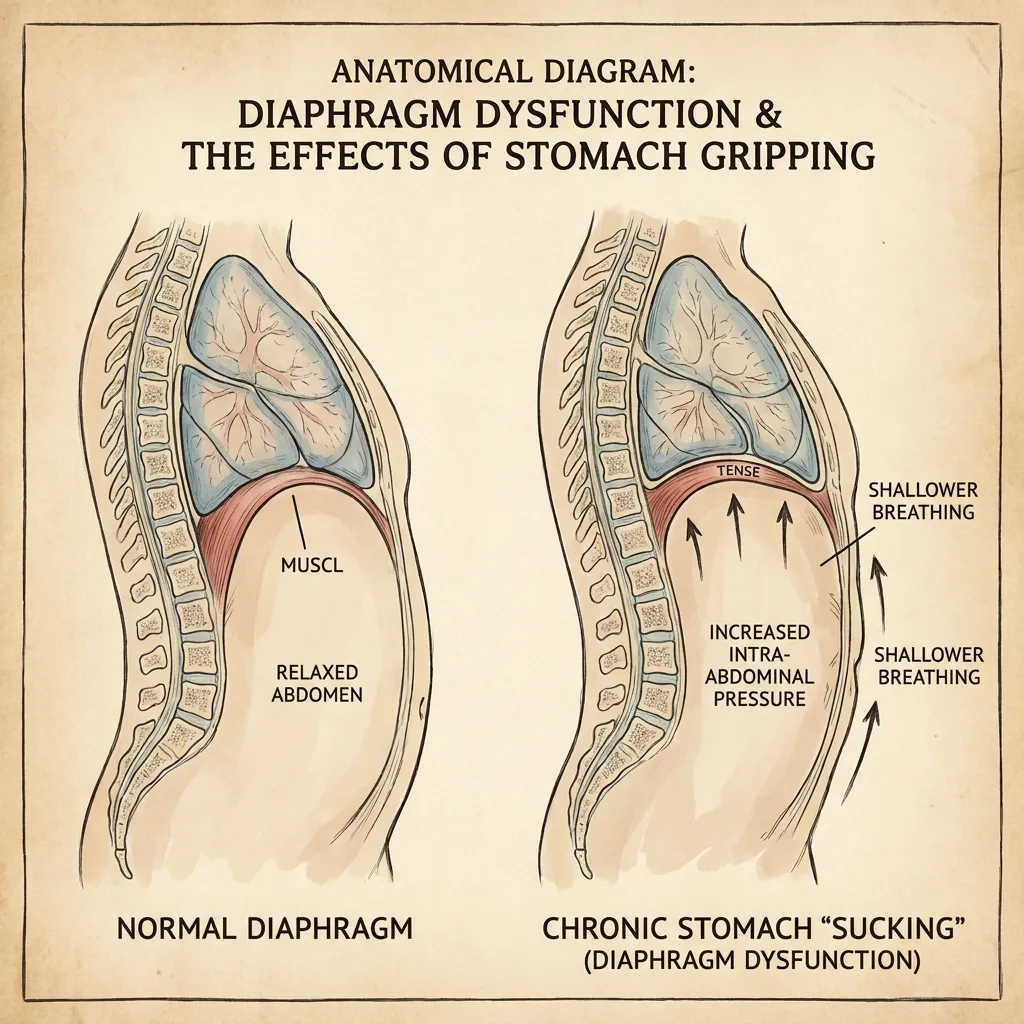
If you want to know if you are suffering from the physical effects of this habit, look for a few visual cues: a slightly upturned belly button, a firm upper abdomen combined with a softer lower “pooch,” or a distinct horizontal crease right across your midsection. But the cosmetic changes are just the tip of the iceberg—the internal damage is much worse.
Read More: Hidden Causes of Constipation (And How to Find Relief)
Breathing Issues Linked to Sucking in Your Stomach
To take a proper, natural breath, your diaphragm needs to expand downward, making room for your lungs to fill with oxygen. When you are sucking in your stomach, you block that downward motion entirely.
Instead, your body is forced to rely on shallow chest breathing. This compensation can reduce your oxygen intake by a staggering 30%. Because your ribs and lungs push upward into your neck and shoulders to find space, you often end up with chronic neck pain, headaches, and a stiff mid-back.
Pelvic Floor Problems Caused by Sucking in Your Stomach
Perhaps the most alarming side effect is what happens to your lower half. Your core and pelvic floor are designed to work together like a cohesive cylinder. By perpetually clenching your upper abs, you drastically increase your intra-abdominal pressure.
Where does all that pressure go? Straight down. For many women, sucking in your stomach creates a relentless downward force that overwhelms the pelvic floor muscles. Over time, this directly contributes to severe issues like urinary incontinence (leaking when you sneeze or laugh), pelvic organ prolapse, and even sexual dysfunction.
How to Break the Habit and Stop Sucking in Your Stomach
The good news is that Hourglass Syndrome is entirely treatable. You just have to be willing to embrace a softer, more relaxed belly and retrain your nervous system.
Diaphragmatic Breathing Tips to Stop Sucking in Your Stomach
The very first step to recovery is unlearning your toxic breathing patterns. You need to practice diaphragmatic breathing (often called “belly breathing”). Place a hand on your belly and take a deep breath in—your stomach should expand outward like a balloon, pressing into your hand. When you exhale, it should naturally fall.
Read More: 6 Healthy Habits That Make Your Life Worse (And What to Do)

Core Stretches to Heal Your Body
Because your abdominal fascia has likely shortened from years of gripping, stretching is essential. Incorporate gentle yoga poses, like the Cobra or Upward-Facing Dog, to stretch the front of your body and release that deep-seated tension.
It is time to let go of the invisible corset. Releasing your core not only heals your pelvic floor and cures your back pain, but it is also a radical act of body acceptance. Stop stomach gripping, take a deep breath, and let your body function exactly the way it was meant to.