


We’ve all dealt with the annoyance of sudden hiccups after eating a little too fast, having a fizzy drink, or experiencing a sudden temperature change. Most of the time, they are completely harmless and fade away after a few minutes. But what if they strike out of nowhere, refuse to stop, and are accompanied by an overwhelming sense that something isn’t right? It might sound shocking, but recognizing hiccups as a stroke symptom could quite literally save your life—or the life of someone you love.
While public health campaigns have done an excellent job teaching us the classic signs of a stroke (like facial drooping or slurred speech), the medical community is shedding light on subtler, atypical warning signs. At Elits Buzz, we believe that staying informed is your best defense. Let’s break down exactly why a severe bout of hiccups can signal a brain emergency, who is most at risk, and what you need to do if it happens.

The Medical Science Behind Hiccups as a Stroke Symptom
To understand how a seemingly innocent reflex can signal a life-threatening emergency, we have to look at the brain. Hiccups are an involuntary spasm of the diaphragm—the primary muscle we use to breathe. When the diaphragm jerks suddenly, it forces you to quickly suck in air, which snaps your vocal cords shut and creates that signature “hic” sound.

Normally, this reflex is triggered by minor irritations in your digestive tract or nerves. However, the command center that controls your breathing and the hiccup reflex is located in the back of your brain, specifically in the brain stem (the medulla oblongata).
When a person suffers an ischemic stroke—where a blood clot blocks blood flow to the brain—in the back of the brain, this vital control center is instantly deprived of oxygen. The dying brain cells trigger chaotic electrical signals, which can severely disrupt your breathing center. The result? A sudden, violent, and relentless case of hiccups. Identifying these neurologically triggered hiccups as a stroke symptom is critical because brain cells die at a staggering rate of 12 million cells per minute during an active stroke.
Read More: 7 Health Symptoms You Shouldn’t Ignore (Expert Advice)
Why This Subtle Sign is Often Missed (Especially in Women)
One of the most dangerous aspects of experiencing hiccups as a stroke symptom is how easily it can be brushed off. Most people will try drinking a glass of water upside down or holding their breath, assuming the spasm will eventually pass.
Medical data shows that atypical stroke symptoms—including intractable hiccups, sudden nausea, severe fatigue, and sudden mood changes—are actually reported more frequently in women. Because these signs deviate from the standard textbook symptoms, women are sometimes misdiagnosed in the emergency room, or they delay calling 911 because they don’t want to “make a fuss” over hiccups and a headache.
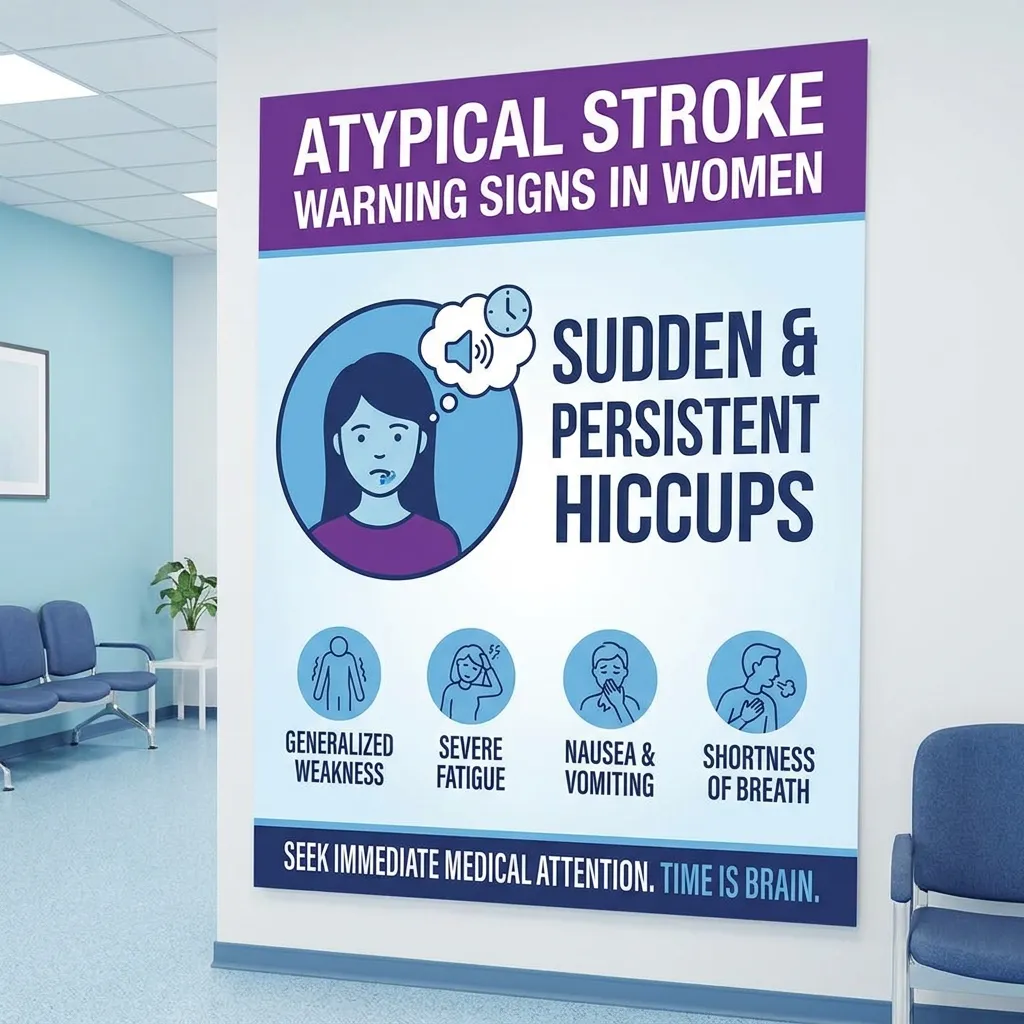
Identifying Hiccups as a Stroke Symptom Alongside Other Signs
A brain stem stroke rarely happens in total isolation. If someone is experiencing relentless hiccups as a stroke symptom, you should immediately look for other neurological red flags. Even if the symptoms seem mild or confusing, do not wait.

Watch for these accompanying warning signs:
The “Thunderclap” Headache: A sudden, excruciating headache that feels like the worst pain of your life.
Sudden Confusion: Trouble following a conversation, sudden memory loss, or an unexplained change in behavior and mood.
Vision Issues: Blurriness, double vision, or a sudden loss of sight in one or both eyes.
Numbness or Tingling: Especially if it is localized to the face, or on one side of the arms or legs.
Coordination Loss: Sudden dizziness, vertigo, or an inability to walk in a straight line.
If you notice any of these signs paired with sudden, uncontrollable hiccuping, the situation is a medical emergency.
Read More: 11 Most Embarrassing Doctor Visits That Will Make You Cringe
What to Do If You Suspect a Stroke
When it comes to the brain, time is your most precious asset. If you suspect that you or someone else is displaying hiccups as a stroke symptom, do not attempt to drive to the hospital, and absolutely do not lay down to “sleep it off.”
Call 911 immediately. Emergency responders can begin life-saving treatment the moment they arrive and will alert the hospital’s neurology team to prepare for a stroke patient. Once at the hospital, doctors can administer clot-busting drugs, provided the patient arrives within the critical first few hours of symptom onset.
While it’s rare for hiccups to be the only sign of a stroke, knowing that this strange, everyday bodily quirk can occasionally mask a severe medical crisis gives you the power to act fast. Trust your gut—if a bout of hiccups feels abnormally intense, sudden, and wrong, err on the side of caution and get medical help.