


When examining the concerning trends affecting young boys in modern classrooms, a troubling picture begins to emerge. Educators on the front lines are witnessing a massive cultural shift fueled by digital dependency, toxic online influencers, and a seemingly growing apathy toward traditional milestones. From an unhealthy obsession with hyper-masculine content creators to a heavy reliance on AI tools to do their heavy lifting, today’s youth are navigating a chaotic environment.
Teachers are getting incredibly honest about what they are seeing every day. The classroom has become a microcosm of a much larger “boy crisis.” We have curated nine of the most revealing insights from educators who are highlighting the concerning trends affecting young boys. Here is what they had to say about this growing cultural dilemma.

The Root of the Boy Crisis: Why These Concerning Trends Affecting Young Boys Matter
To understand the full scope of this issue, we must listen to the professionals who interact with these kids five days a week. The challenges range from academic to deeply behavioral, suggesting that a fundamental shift in how we raise and guide our sons is urgently needed.
Read More: Dark Side of 90s Gifted and Talented Programs
1. The Technology and AI Trap
One middle and high school teacher pointed out a staggering delay in basic skills and academic drive. “Our boys are in crisis,” they shared. Compared to female peers, many young men are falling behind in responsibility and even fine motor skills. Because so many have been raised on tablets, simple tasks like using scissors have become a challenge. Furthermore, the reliance on AI is absolute—many simply refuse to try, preferring to let a computer do their thinking while they remain glued to their screens.
2. Escalating Entitlement and Disrespect
Another educator highlighted a severe lack of respect fueled by parental enabling. From spitting on classmates to straight-up bullying female teachers, the behavior is often brushed off by parents who believe their sons can do no wrong. Alarmingly, these same students will immediately comply when a male teacher enters the room, pointing to a deep-seated, learned disrespect for female authority figures.
3. The Toxicity of the Manosphere Influence
A young substitute teacher shared a harrowing experience regarding how male influencers are shaping the concerning trends affecting young boys. Students openly idolize controversial figures like Andrew Tate, mimicking his rhetoric about wealth and status. In one instance, students disrupted class by playing inappropriate explicit content at full volume. The lack of consequences for this misogynistic behavior leaves many young female educators feeling incredibly pessimistic about the future.

How Digital Culture Drives the Concerning Trends Affecting Young Boys
The digital landscape is not just a distraction; it is actively shaping how young men view the world, their peers, and their own futures.
4. Apathy and the Refusal to Engage
An 8th-grade teacher noted a massive spike in general apathy. Bright, capable boys are openly admitting they plan to “ChatGPT their way through high school.” If a task requires effort or doesn’t come instantly, they shut down. Asking for five sentences instead of three is enough to make them quit entirely, showing a fragile resilience compared to their female counterparts.
5. The Widening Academic Gap
A male teacher observed that the overwhelming majority of high-achieving students are now girls. Whether looking at GPAs, class rank, or general academic drive, boys have become the exception rather than the rule when it comes to high achievement. There is a cultural sickness, he argues, where we are failing to convince our young men that education and intellectual growth hold any real value.

6. Shifting Interests and Casual Prejudice
A ninth-grade educator expressed alarm over how modern boys view the world. “Everything is a joke, nothing is serious,” they stated. Chivalry is dead, and genuine interest in female peers as human beings has been replaced by an intense, almost strange obsession with diet, weight-lifting, and “looks-maxing.” Even more disturbing is the shocking rise in casual racism and anti-Semitism treated as everyday humor.
Reversing the Concerning Trends Affecting Young Boys
Recognizing the problem is only the first step. The psychological toll these cultural shifts are taking on young men is becoming impossible to ignore.
Read More: 9 Best Children’s Books to Read Aloud
7. A Step Backward in Social Acceptance
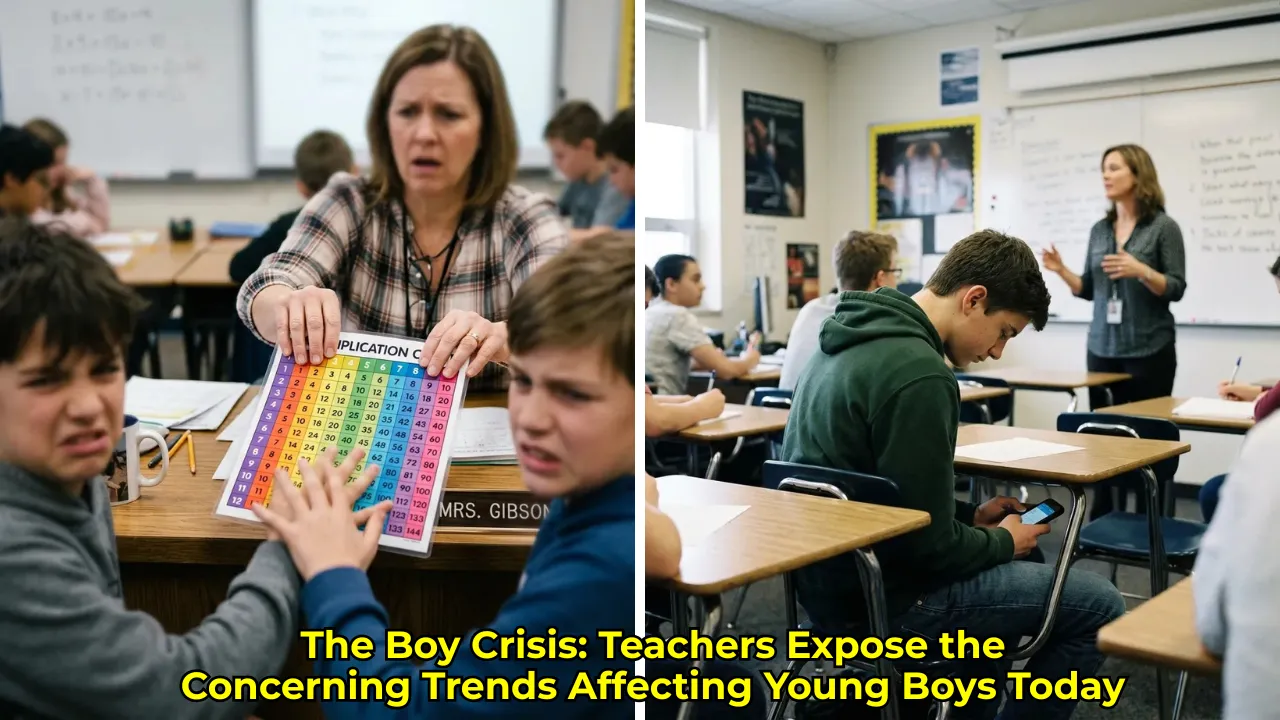
While the mid-2010s saw a wave of acceptance among youth, the rise of “alpha male” podcasts has reversed that progress. One veteran middle school teacher noted that homophobia is aggressively back in style. The fear of being perceived as feminine or “gay” is so extreme that male students will refuse to use items like colored multiplication charts simply because they feature rainbow colors.

8. Screen Dependency Over Real-World Action
According to another teacher, the root of impulsivity, poor language, and lack of drive directly correlates with screen time. They noted that their best, most focused students are now the athletes—not because of the sport itself, but simply because their afternoons are spent moving and engaging with the real world rather than being pacified by and glued to digital displays.
9. A Silent Mental Health Struggle
Perhaps the most heartbreaking observation comes from an English teacher who described a “quiet, building depression” among boys—a creeping dark fog. With a massive lack of relatable, realistic role models in media and literature, young men are left adrift. Without solid guidance, their main intake becomes video games, explicit internet content, and toxic online grifters who only push them further into isolation.

We have to ask ourselves: are we doing enough to guide this next generation? Addressing these concerning trends affecting young boys will require a united effort from parents, educators, and the community at large to pull them out of the digital fog and back into the real world.