



Have you ever noticed how easy it is to be endlessly patient with a complete stranger, yet immediately snap at your own mother over the slightest irritation? If you’ve ever found yourself carrying a heavy load of childhood baggage into your adult life, you are far from alone. Healing mother-daughter relationships is often one of the most complex, emotionally taxing, yet ultimately rewarding journeys we can embark upon.
For years, I was the “mean daughter.” To the outside world, I seemed lovely—polite, poised, and deeply patient. But behind closed doors, I was incredibly unforgiving toward the woman who gave me life. It took a chance encounter with a total stranger to hold up a harsh mirror to my behavior and change my perspective forever.

The Root of Resentment in Mother-Daughter Relationships
When my biological father abandoned our family, he left my mother with three young daughters and aggressive debt collectors banging on our front door. My mother did exactly what she had to do: she kept us afloat. She sold our beautiful suburban home, moved us into a cramped apartment, and started commuting to the city just to pay the bills.

But as a first-grader, I couldn’t comprehend the crushing weight of her reality. I didn’t see her profound sacrifice; I only saw her stress. To me, she was unpredictable, prone to angry outbursts that left me terrified and constantly walking on eggshells.
I vividly remember one morning when I was eight years old. I was a spacey, introverted bookworm. My mother, frantic and exhausted, tugged me toward the mirror by my hair. She screamed at me for wearing a wrinkled plaid shirt, smacking me in her panic about making us late for school.
What I didn’t know then—what I only learned decades later—was that she had lost her engagement ring the night before. That ring was her last tangible link to my father, and she was distraught, terrified of the uncertain future. But as a child, you don’t possess that kind of context. You only internalize the fear, which slowly calcifies into a resentment that becomes a major roadblock to healing mother-daughter relationships later in life.
Read More: Grieving an Estranged Father: Coping with Complex Loss
Why We Punish Our Parents for the Past
I survived my childhood, but unfortunately, so did my anger. I grew up feeling judged for being too quiet, too sensitive, or too awkward. While my family loved me, I often wondered if they actually liked me.
By my 30s, this unresolved tension had turned me into a perpetually exasperated adult child. All my mom had to do was start a sentence with “In other words…” and my blood would boil. I snapped at her for her loud phone etiquette in coffee shops, her tendency to start stories in the middle, and her harmless, repetitive quirks.
I punished her daily for that long-ago scene in the mirror. I believed my anger was entirely justified, failing to see that my own behavior had become just as toxic. The process of healing mother-daughter relationships requires us to ask a deeply uncomfortable question: Where does their responsibility end, and ours begin?
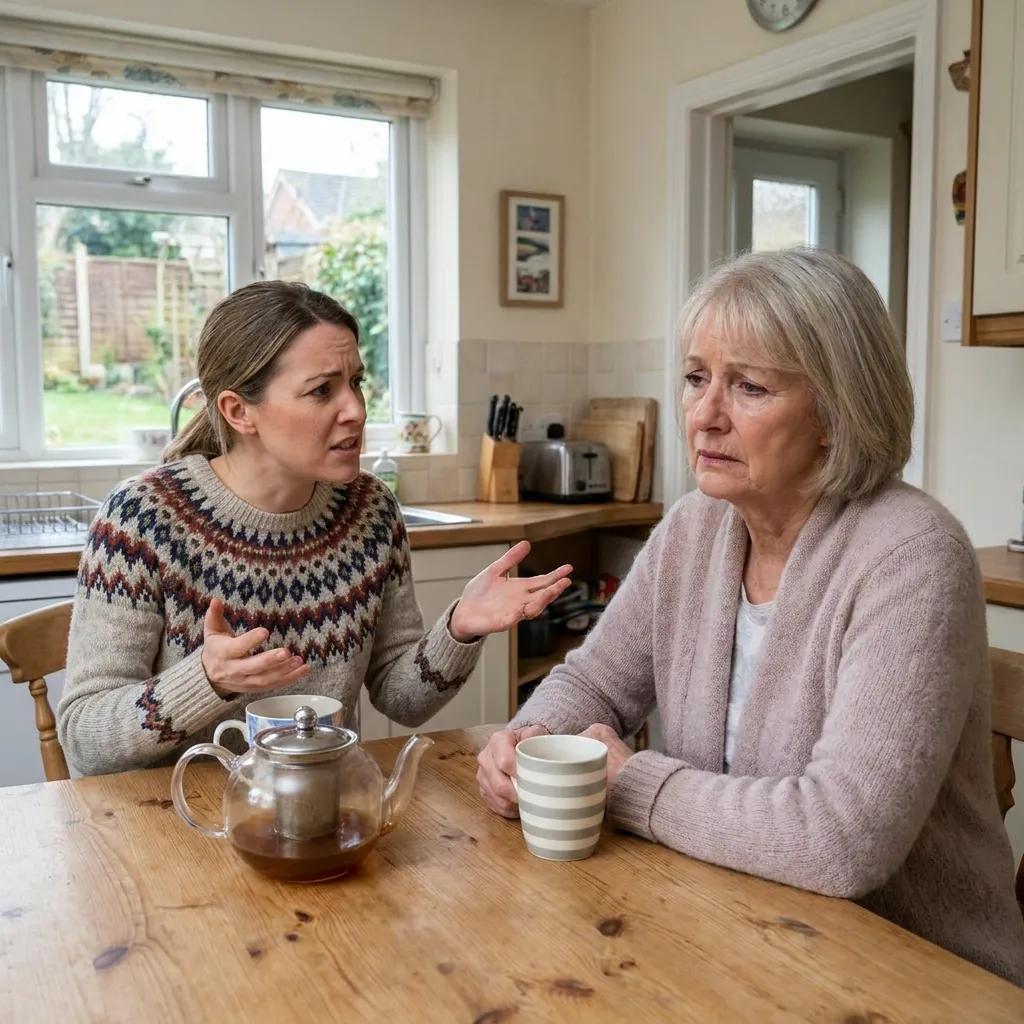
The “Emma” Epiphany: A Mirror to Our Own Behavior
The ultimate turning point in my journey toward healing mother-daughter relationships arrived in my 40s during a tropical vacation with my husband. On a snorkel boat, I met a young woman named Emma.
Emma was in her twenties, traveling with her parents. She seemed absolutely spectacular—interning at a women’s shelter, coloring with my toddler, and projecting an aura of total maturity. I was so impressed that the next morning, while waiting in line for coffee, I gushed to Emma’s mother, Amy, about how poised and wonderful her daughter was.
Amy’s smile instantly faded. She looked at me, thoroughly exhausted, and shattered the illusion.
“You know why we didn’t go on that boat?” Amy asked. “Because Emma was on it. We took our grown daughter on vacation, and she has criticized us nonstop. My pants are too short, my stories are too long, my husband walks too fast. Trust me, we wanted to go snorkeling, but we needed a break from Emma.”
In that moment, the universe handed me a massive reality check. Amy wasn’t just complaining about her daughter; she was describing me.
Confronting the “Mean Daughter” Syndrome
I was Emma. I was sweet, empathetic, and accommodating to strangers, colleagues, and friends—but I was rotten to the very person who had sacrificed everything for me. I was endlessly critical of the grandmother who potty-trained my children and showered them with unconditional love, simply because of her minor, peevish habits.
When I eventually confessed this epiphany to my mom, she agreed. I was acting like Emma. But instead of getting defensive, she shared a profound piece of wisdom she had used to cope with her own mother: “My mother’s bad behavior does not reflect badly on me.”
Actionable Steps for Healing Mother-Daughter Relationships
That simple phrase changed the entire trajectory of our dynamic. Healing mother-daughter relationships isn’t about demanding perfection from our parents; it’s about managing our own triggers. My mother was responsible for her loud phone manners, but I was fully responsible for my disproportionate, petulant reactions.
If you are navigating your own fractured family dynamic, here is how you can begin the vital work of letting go:
1. Recognize They Are Perfectly Imperfect
When I stopped demanding that my mother compensate for my childhood trauma, I could finally see her for who she truly is today. She is a vibrant, free-hearted matriarch who wins golf tournaments, jumps off floating docks, and fiercely loves her family. Healing mother-daughter relationships demands that we see our parents as flawed, multidimensional humans, not just as the caretakers who occasionally failed us.
2. Separate Past Trauma from Present Annoyances
It is deeply ironic to survive a massive shared trauma—like the abandonment by a parent—only to get stuck bickering over how loudly someone talks to Siri. Ask yourself: Are you genuinely angry about the present moment, or are you projecting old grief onto a safe target? My mother’s past rage was never truly meant for me, and my current resentment was never truly meant for her.

3. Commit to Self-Examination and Forgiveness
Parent-child dynamics are lifelong works in progress. According to sociologist Karl Pillemer, Ph.D., who spearheaded the Cornell Family Reconciliation Project, most people feel a profound sense of relief after repairing a family rift. Letting go of the past drops a heavy weight from your shoulders, freeing you from obsessive, guilty thinking.
Read More: Coping With a Far-Right Extremist Mom
The Beautiful Reality of Moving Forward
My mother can still irritate me. When she casually mentions someone taking Ozempic, I know exactly what she’s hinting at. But instead of exploding, I let it go. We now use my “Emma-ness” as a shorthand joke to diffuse tension. When I catch myself being overly critical, I remember the young woman on the boat, take a deep breath, and choose grace.

Healing mother-daughter relationships doesn’t mean erasing the past; it means refusing to let it poison the present. For me, shedding that heavy cloak of childhood resentment revealed something beautiful: a steady, safe, and loving mother who had been waiting for me all along.
If you see glimpses of “Emma” in yourself, know that it is never too late to change the narrative. Forgive the small stuff. Embrace the imperfections. You might just find that the relationship you’ve been fighting against is exactly the one you need.